What if the "silver" in your smile is actually hiding a chemical reality that your body has been quietly managing for decades? You likely trusted these restorations as the standard of care; however, the anxiety you feel regarding heavy metal exposure is rooted in a valid concern for your systemic wellness. It's often confusing to reconcile the "silver" label with the fact that these amalgams are actually 50% mercury by weight. Understanding the risks of old mercury fillings is the first step toward reclaiming your health and peace of mind.
This guide offers a clear, evidence-based look at the hidden chemical and structural dangers of aging dental work. With the global phase-out of dental amalgam already underway, you'll discover how mercury vapor interacts with your body and why these rigid metals often lead to silent tooth fractures. We'll preview the path to a safer, more aesthetic smile through the Safe Mercury Amalgam Removal Technique (SMART) and the latest innovations in biocompatible materials. Your journey toward systemic harmony and restorative excellence starts here.
Key Takeaways
- Uncover the reality of dental amalgam composition and why the "silver" label masks a material that is actually 50% mercury by weight.
- Understand the mechanism of mercury vapor release and how its interaction with the respiratory system creates a unique path to systemic exposure.
- Identify the mechanical risks of old mercury fillings, specifically how thermal expansion and the "wedge effect" can compromise your natural tooth structure.
- Learn why the Safe Mercury Amalgam Removal Technique (SMART) is essential for protecting your health during the transition to metal-free restorations.
- Explore how modern, biocompatible materials like Zirconia and high-grade ceramics restore both aesthetic harmony and long-term functional excellence.
Understanding Dental Amalgam: More Than Just 'Silver' Fillings
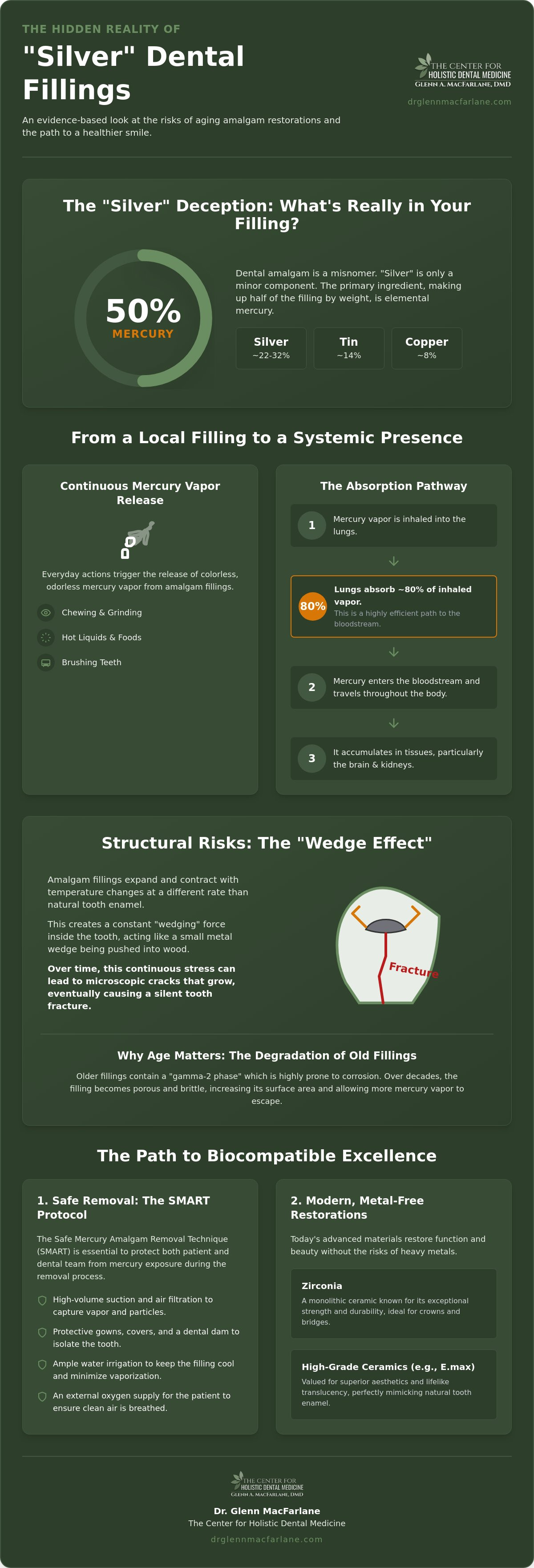
The term "silver filling" is a historical misnomer that suggests a material composed primarily of a precious metal. In reality, silver is just a supporting player to the primary ingredient. Dental amalgam is a restorative material composed of approximately 50% elemental mercury by weight, combined with a powdered alloy of silver, tin, and copper. This specific chemistry was originally chosen for its durability and ease of use, but it creates a material that is fundamentally different from the natural tooth structure it replaces. It's a blend of industrial strength and chemical complexity.
For decades, the dental amalgam controversy has centered on whether this mercury remains trapped within the restoration or escapes into the body. While the mercury is bound to other metals, this bond isn't permanent or impenetrable. Over time, the structural integrity of these fillings shifts, leading many patients to investigate the risks of old mercury fillings as part of a broader commitment to systemic health. This process is a journey from simply treating a cavity to pursuing true biological harmony.
Everyday actions like chewing, drinking hot liquids, or even brushing your teeth create friction and thermal energy. Because mercury is a liquid at room temperature and highly volatile, this heat triggers the release of microscopic amounts of elemental vapor. It's not a static event; it's a slow, continuous process that occurs throughout the life of the restoration. This vaporization is the primary way the material interacts with your body's internal environment, moving beyond the mouth and into the systemic whole.
The Elemental Mercury Component
Mercury is unique among metals because it remains in a liquid state at room temperature. This fluidity allows it to be mixed into a pliable putty for dental work, but it also means the metal is prone to evaporation. These restorations act as a persistent source of mercury vapor, which is both colorless and odorless. This continuous emission means that even while you sleep, your body is subtly interacting with the chemical components of your dental history. It's a balance of technical precision and biological compatibility.
Why Age Matters in Amalgam Restoration
Fillings placed 10 or 20 years ago aren't the same today as they were on the day of placement. Older dental materials often contain what scientists call the "gamma-2" phase, a chemical state that is particularly susceptible to corrosion and breakdown. As the metal corrodes, it becomes porous and brittle. This degradation increases the surface area of the filling, potentially allowing more vapor to escape into the oral cavity. Over decades, this process contributes to bioaccumulation, where small daily exposures add up to a significant systemic presence. Understanding the risks of old mercury fillings involves recognizing that time is a catalyst for chemical change. It's a transition from outdated standards to refined, modern alternatives.
The Systemic Connection: How Mercury Vapor Impacts Wellness
The transition from the oral cavity to the rest of the body happens more efficiently than most people realize. While ingesting a small piece of a filling is generally less concerning because the digestive tract absorbs very little elemental mercury, inhalation is a different story. When you breathe in the vapor released by friction or heat, your lungs absorb roughly 80% of that mercury directly into your bloodstream. This invisible path is one of the primary risks of old mercury fillings that biological practitioners monitor closely. It's a matter of understanding how a localized material becomes a systemic presence.
Once in the blood, elemental mercury is highly lipophilic, meaning it's attracted to fats. This characteristic allows it to cross the blood-brain barrier with ease, where it can accumulate in neurological tissues. The body's ability to process this load depends on the "Total Body Burden," a concept that views health as a cumulative balance. If your system is already managing other environmental stressors or genetic predispositions, your capacity to clear heavy metals may be lower than someone else's. It's not just about the fillings; it's about your body's unique resilience and long-term vitality.
Neurological and Renal Considerations
Mercury has a notable affinity for the central nervous system and the kidneys. These organs act as the body's primary filters and command centers, making them particularly sensitive to heavy metal accumulation over time. Scientific literature suggests that even low-level, long-term exposure can influence renal efficiency and neurological steady-state. Maintaining systemic harmony requires a proactive approach to these filtration systems, ensuring that your internal environment remains as refined and clear as your aesthetic goals. Exploring biocompatibility testing can provide personalized insights into how your unique biology responds to various dental materials.
Identifying Vulnerable Populations
Specific groups require a more cautious approach to mercury exposure. According to FDA recommendations on dental amalgam, pregnant women, nursing mothers, and children are among those who should prioritize non-mercury alternatives. Individuals with existing autoimmune sensitivities or neurological conditions may also find that reducing their heavy metal load supports their broader wellness journey. Biological dentistry looks beyond the tooth to the whole-body impact, recognizing that every clinical choice ripples through your entire system. This perspective ensures that your dental care remains a partner in your journey toward health-conscious living and functional excellence.
Structural Risks: The Mechanical Failure of Aging Amalgams
While much of the dialogue surrounding dental restorations focuses on toxicity, the physical integrity of the tooth itself is often the first casualty. Metal fillings are essentially rigid plugs forced into a flexible, organic structure. Unlike natural enamel, metal expands and contracts significantly when exposed to temperature changes from hot coffee or cold water. This thermal expansion creates a constant cycle of stress. Over years, this mechanical pressure is one of the most overlooked risks of old mercury fillings. It's a quiet, persistent force that compromises the very foundation of your smile.
This pressure often manifests as the "wedge effect." Because amalgam doesn't bond to the tooth, it simply sits in the cavity, acting as a lever. Every time you bite down, that metal is driven deeper into the tooth structure, eventually causing the walls of the tooth to flex and fatigue. This leads to micro-leakage, where the seal between the metal and the enamel fails. Bacteria then seep into these microscopic gaps, causing decay that remains invisible to the naked eye. As these materials break down, the debris and corrosion products contribute to the broader environmental impact of dental mercury, emphasizing the importance of proper filtration and safe disposal protocols.
Corrosion is another hallmark of aging metal. As the silver, tin, and copper components oxidize, they release metallic byproducts that can "tattoo" the surrounding gum tissue or stain the remaining tooth structure a dark, grayish hue. This isn't just an aesthetic concern; it's a sign that the material is breaking down and losing its structural purpose. It's a shift from a functional restoration to a mechanical liability.
Hidden Decay and Micro-fractures
One of the most challenging aspects of these restorations is their opacity. Metal is dense. It blocks X-rays completely. This means a practitioner cannot see what's happening directly beneath the filling until the material is removed. Often, what appears to be a stable restoration hides a network of craze lines or deep micro-fractures. By the time a vertical fracture is visible, the tooth may be beyond simple repair. Choosing to replace these aging materials before they fail is a proactive step toward preserving your natural tooth architecture and avoiding more invasive treatments.
The Aesthetic and Functional Shift
Modern dentistry has moved away from the "patch and repair" mentality of the past. Today, the focus is on restoration, using materials that mimic the light-reflecting properties and physical behavior of natural teeth. Metal-free options like high-grade ceramics and Zirconia offer a refined, health-conscious aesthetic that aligns with your overall wellness goals. This approach requires a specific philosophy of care. Understanding What is a Biological Dentist? helps clarify why looking at the interconnectedness of materials and mechanics is vital for long-term health. It's about achieving a balance between technical excellence and organic beauty.
The SMART Protocol: Navigating Safe Mercury Removal
The most significant paradox in biological dentistry occurs during the replacement of aging restorations. While leaving them in place carries long-term systemic implications, the act of traditional removal creates a sudden, intense release of mercury vapor. This peak exposure is one of the most critical risks of old mercury fillings if the procedure isn't handled with clinical precision. When a high-speed drill meets an amalgam filling, the friction generates heat that aerosolizes the mercury. To mitigate this, practitioners utilize the Safe Mercury Amalgam Removal Technique (SMART), a rigorous safety protocol designed to protect the patient, the dental team, and the environment.
SMART isn't just a list of suggestions; it's a comprehensive methodology that requires specialized training and a commitment to superior standards. Certification in this protocol is non-negotiable for those prioritizing systemic wellness. It transforms a high-risk procedure into a controlled, refined experience. By utilizing high-volume evacuation and advanced filtration, we ensure that the vapor released during the sectioning of the filling is captured at the source. This level of care reflects a deep understanding of the interconnectedness of oral and systemic health, moving beyond basic dentistry into the realm of technical excellence.
Steps for a Mercury-Safe Appointment
A SMART-certified appointment feels fundamentally different from a standard dental visit. Your safety is prioritized through layers of physical and atmospheric barriers. Patients are provided with an external air source, typically via a nasal cannula, to ensure they breathe clean oxygen or medical-grade air rather than the ambient air near the treatment site. A non-latex rubber dam is meticulously placed to isolate the tooth, preventing any debris or mercury particles from being swallowed or absorbed by the oral mucosa. Simultaneously, sophisticated air filtration units are positioned inches from your mouth to neutralize vapor before it can disperse. This layered approach provides a sense of calm confidence and professional gravitas.
Biocompatibility Testing Before Restoration
Removing the old material is only half of the journey toward systemic harmony. Before placing a new restoration, it's essential to ensure that the replacement material is compatible with your unique immune system. We utilize biocompatibility testing to screen various resins and ceramics against your blood chemistry. This ensures that your new mercury-free composite fillings or porcelain restorations don't trigger an inflammatory response. By choosing materials like high-grade porcelain or BPA-free composites, we restore both the function and the aesthetic harmony of your smile. If you're ready to transition toward a metal-free future, explore our specialized approach to Safe Mercury Filling Removal in New Jersey.
Transitioning to Biocompatible Excellence
Moving beyond the era of metal restorations is a significant milestone in your wellness journey. It's a transition that replaces mechanical liabilities with materials that respect your body's natural chemistry. At the Center for Holistic Dental Medicine, we view this shift as an opportunity to align your oral environment with your broader health goals. By proactively addressing the risks of old mercury fillings, you're not just fixing a tooth; you're investing in a long-term strategy for systemic harmony. This approach replaces the anxiety of heavy metal exposure with the calm confidence of modern, biocompatible science.
Our commitment to refined, health-conscious care means we don't just fill gaps; we restore architecture. Every restoration is a life-changing experience designed to feel as natural as it looks. We focus on materials that are as durable as they are beautiful, ensuring your smile remains a reflection of your commitment to excellence. This philosophy ensures that your dental care is a supportive partner in your pursuit of a vibrant, toxin-free lifestyle.
Metal-Free Restorative Options
Modern dentistry offers sophisticated alternatives that eliminate the need for metal entirely. Zirconia has emerged as a premier choice for its exceptional strength and tissue-friendly properties. Exploring the Benefits of Zirconia Dental Implants reveals how these ceramic solutions offer a stable, aesthetic foundation without the risks of corrosion. For smaller restorations, we utilize mercury-free, BPA-free composite fillings. These resins bond directly to the tooth, reinforcing the structure while blending seamlessly with your natural enamel. These materials are chosen for their technical excellence and their ability to maintain systemic steady-state.
Your Path to a Healthier Smile
The journey begins with a comprehensive evaluation using digital X-rays and 3D Cone Beam Imaging. This technology allows us to see beyond the surface, identifying hidden fractures or decay that the risks of old mercury fillings often mask. We then create a phased treatment plan tailored to your specific needs, allowing your body to adapt and heal at its own pace. This structured, logical flow ensures that every step is purposeful and safe. The ultimate goal of our restorative process is to achieve a perfect harmony between aesthetic brilliance and systemic safety.
Your Path to Biocompatible Wellness
Addressing the risks of old mercury fillings is a profound step toward long-term systemic harmony. By moving beyond outdated materials, you protect your body from cumulative vapor exposure and secure the structural integrity of your natural teeth. Modern dentistry offers a path that prioritizes your unique biology while achieving a refined, aesthetic result. It's a journey from managing a chemical liability to embracing a state of total health and confidence.
As a SMART Certified Practitioner, Dr. MacFarlane combines clinical authority with a holistic outlook. Our practice utilizes advanced 3D CBCT imaging to evaluate your dental architecture with complete precision. We also provide biocompatibility testing to ensure every new restoration aligns with your immune system's specific needs. This level of technical excellence ensures that your transition is as safe as it is transformative. Schedule your mercury-safe evaluation with Dr. MacFarlane today. Your journey toward a healthier, more vibrant smile deserves a partner who values your whole-body wellness.
Frequently Asked Questions
Are old mercury fillings really dangerous if they aren't hurting?
Pain is rarely a reliable indicator of the risks of old mercury fillings because the chemical and structural degradation happens silently over decades. Even if a tooth feels perfectly fine, the restoration may be releasing microscopic amounts of vapor or developing deep micro-fractures. Proactive evaluation is often necessary to prevent a sudden vertical fracture that could lead to the loss of the natural tooth structure.
What are the symptoms of mercury exposure from dental fillings?
Symptoms of chronic low-level mercury exposure are often systemic and can include neurological sensitivities, unexplained fatigue, or renal stress. Because mercury is lipophilic and crosses the blood-brain barrier with ease, it can impact various aspects of wellness that aren't traditionally associated with oral health. This is why biological practitioners look beyond the mouth to understand the "Total Body Burden" and its impact on your vitality.
Why shouldn't I just go to a regular dentist to have my silver fillings removed?
A standard dentist may not utilize the specialized air filtration, external oxygen sources, and barrier systems required to capture aerosolized mercury vapor during the removal process. Without the SMART protocol, the act of drilling into the amalgam can cause a significant spike in exposure for both the patient and the dental team. Choosing a certified practitioner ensures that your transition to a metal-free smile is handled with clinical precision and safety.
Is the SMART protocol really necessary for every patient?
The SMART protocol is necessary for any patient seeking to minimize the sudden peak in mercury vapor that occurs when a filling is sectioned and removed. It's a gold standard for safety that ensures the removal process doesn't compromise your systemic wellness or the local environment. By utilizing high-volume evacuation and specific physical barriers, we create a controlled environment that prioritizes your health-conscious lifestyle and safety.
Can I have all my mercury fillings removed in one visit?
Whether you can remove all fillings in a single visit depends on your unique health profile, the complexity of the restorations, and your body's resilience. We often recommend a phased treatment plan to respect your natural healing pace and avoid overwhelming your system. This steady, logical approach ensures that your journey toward systemic harmony remains a positive and life-changing experience without rushing the biological process.
What materials are used to replace mercury fillings?
We utilize high-grade, metal-free materials such as Zirconia, porcelain, and BPA-free composite resins to replace aging amalgams. These alternatives are selected through biocompatibility testing to ensure they integrate harmoniously with your unique immune system while providing a refined, natural aesthetic. These modern materials offer superior structural strength and light-reflecting properties that mimic your natural enamel, ensuring both functional excellence and aesthetic brilliance.
Does insurance cover the cost of safe mercury amalgam removal?
Most insurance providers offer some level of coverage for the removal of restorations that show clinical signs of decay, leakage, or structural failure. You should contact your specific carrier to understand your benefits, as every plan varies regarding the criteria for replacement and the types of materials they cover. Our team can help you navigate these details to ensure your path to wellness is as smooth and transparent as possible.
How do I know if my fillings are leaking mercury?
While mercury vapor is odorless and invisible, clinical signs like dark "tattoos" on the gum tissue or visible corrosion on the filling's surface suggest the material is breaking down. Advanced 3D CBCT imaging can also reveal hidden decay or micro-leakage that indicates a failing seal. If you're concerned about the risks of old mercury fillings, a comprehensive evaluation can identify these silent issues before they become painful emergencies.