
What if the persistent fatigue or unexplained inflammation you're experiencing is actually a silent protest from your immune system against your dental work? With over 2,000 dental materials currently available, the choice of what stays in your body for decades is a profound health decision. You deserve to know that your restorations are as unique as your own DNA. This is why biocompatibility testing for dental materials has become the gold standard for those seeking systemic harmony. It transforms a standard clinical procedure into a personalized wellness strategy, ensuring every restoration supports your immune health.
Clinical precision. Organic safety. We know you value both. It's natural to feel overwhelmed by the complexities of modern material science, especially when navigating concerns about heavy metal toxicity. This guide offers a clear, evidence-based plan for non-toxic dental work by explaining the latest 2026 FDA safety standards and risk-management protocols. We'll explore how advanced serum testing validates your health concerns and provides lasting peace of mind. You're about to discover how to align your smile with your body's biological terrain for peak performance and long-term vitality.
Key Takeaways
- Understand how your body's unique biological terrain interacts with restorations to influence long-term systemic health.
- Recognize the mechanics of Type IV hypersensitivity and learn how galvanic stress from dissimilar metals affects your wellbeing.
- Discover how personalized biocompatibility testing for dental materials uses precise serum analysis to identify the safest options for your immune system.
- Identify why individuals with autoimmune conditions or those requiring full mouth reconstructions need a more tailored, non-toxic approach.
- Learn how selecting harmonized materials integrates with the SMART protocol to ensure a refined and mercury-free dental journey.
Beyond the Surface: The Vital Role of Biocompatibility in Modern Dentistry
Biocompatibility represents the seamless, harmonious interaction between restorative materials and living tissue. It's the difference between a body that merely tolerates a foreign object and one that thrives alongside it. In the scientific context of a Biomaterial, this means the substance performs its intended function without eliciting undesirable local or systemic effects. True health requires more than just functional teeth; it requires a biological environment where every restoration acts as a supportive partner rather than a constant irritant.
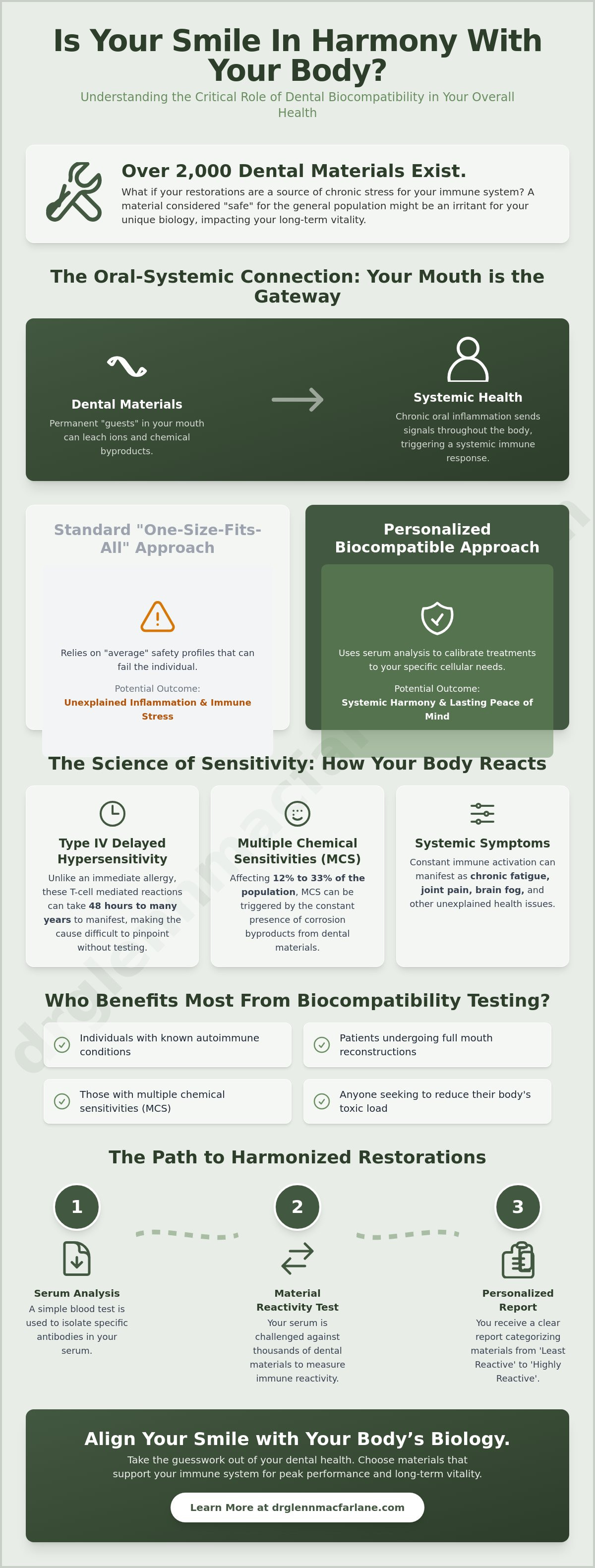
Every individual possesses a unique biological terrain. This internal environment is shaped by your genetics, lifestyle, and existing health challenges. When a foreign substance enters this terrain, your immune system makes an immediate decision. It either accepts the guest or begins a quiet, persistent campaign of defense. We've moved beyond the era of "one-size-fits-all" dentistry. Modern, refined care now utilizes biocompatibility testing for dental materials to calibrate treatments to your specific cellular needs, ensuring clinical precision and organic safety.
The Oral-Systemic Connection
Your mouth is the primary gateway to your entire physical being. It's not an isolated system. Chronic oral inflammation doesn't stay local; it sends inflammatory signals throughout your body, often triggering systemic immune responses. Because dental materials are permanent guests in your biology, their chemical makeup is critical. A material that is "safe" for the general population might be a source of chronic stress for your specific immune system, impacting your overall wellness and vitality.
Why "Standard" Materials Aren’t Enough
There are over 2,000 dental materials currently in use across the industry. Most of these were cleared based on "average" safety profiles. However, averages often fail the individual. For those with heightened sensitivities or a history of autoimmune issues, a standard composite or metal alloy can lead to unexplained systemic inflammation. This is why we focus on dental toxicology and bio-inertness. By moving past "standard" options, we provide a pathway to restorations that are truly harmonious with your body. Key benefits of this individualized approach include:
- Validated Safety: Moving beyond industry averages to find what works for your unique blood chemistry.
- Immune Support: Reducing the total toxic load on your system.
- Long-term Peace of Mind: Knowing your restorations won't trigger delayed hypersensitivity.
Our commitment to refined patient care means looking past the surface. We view every restoration as an opportunity to support your systemic health through clinical excellence and holistic wisdom. By prioritizing biocompatibility testing for dental materials, we ensure that your journey toward a beautiful smile is also a journey toward comprehensive wellness.
The Science of Sensitivity: How Your Body Reacts to Dental Materials
The human body is remarkably vigilant. When a restorative material is placed in the mouth, the immune system doesn't just see a "filling" or a "crown." It sees a complex chemical compound. For many patients, this constant contact leads to Type IV delayed hypersensitivity. Unlike a peanut allergy, which triggers an immediate response, Type IV reactions are mediated by T-cells and can take 48 to 72 hours, or even years, to manifest. This delay makes identifying the specific culprit nearly impossible without biocompatibility testing for dental materials.
Research indicates that Multiple Chemical Sensitivities (MCS) affect between 12% and 33% of the population. For these individuals, the constant presence of corrosion byproducts from dental work acts as a persistent trigger for chronic immune activation. Over time, metals and resins can leach ions into the surrounding tissue. This process doesn't just cause local irritation; it contributes to a systemic burden that can manifest as chronic fatigue, joint pain, or brain fog. Understanding your unique reactivity is the first step toward reclaiming your systemic harmony.
Immune Reactivity vs. Simple Allergy
It's vital to distinguish between an immediate allergic reaction and long-term immune reactivity. A traditional skin-prick test identifies Type I reactions, such as hives or swelling. However, dental materials usually trigger Type IV reactions, which are far more subtle and deep-seated. Your body can "sensitize" to a material over several years of exposure. You might feel fine for a decade, then suddenly experience unexplained symptoms as your biological terrain reaches its threshold. Studying The Biocompatibility of Various Dental Materials reveals that even substances once considered "safe" can become problematic as our understanding of immunology evolves.
The Impact of Galvanic Stress
When different metals, such as a gold crown and a silver amalgam filling, coexist in the mouth, your saliva acts as an electrolyte. This creates a literal battery, producing measurable electrical currents known as galvanic stress. These micro-currents can interfere with the delicate electrical signaling of your nervous system and potentially impact brain health. This "battery effect" is a primary reason many patients prioritize safe mercury filling removal. By eliminating these electrical imbalances, you allow your body to return to a state of neutral, calm performance.
If you've struggled with unexplained health challenges, it's worth considering if your dental work is playing a role. Exploring personalized biocompatibility testing can provide the clarity you need to move forward with confidence and safety.
Evaluating the Options: Primary Biocompatibility Testing Methods
Precision dentistry requires more than clinical skill; it demands biological data. To ensure your restorations support systemic harmony, we move beyond generalized assumptions. Modern laboratory analysis provides a personalized blueprint of your immune system's unique preferences. By utilizing biocompatibility testing for dental materials, we can cross-reference your blood chemistry against a massive database of over 11,000 dental material extracts. This data-driven approach eliminates the guesswork, allowing for a refined restorative plan that respects your body's specific boundaries.
The clinical validity of these methods has grown significantly as our understanding of immunology has deepened. Current research methods for biocompatibility testing emphasize a risk-management approach that looks at the entire lifecycle of a material. This ensures that the resins, ceramics, and bonding agents we choose aren't just functional today, but remain bio-inert for years to come. Using these sophisticated diagnostics allows us to act as your wellness partner, selecting materials that promote healing rather than chronic defense.
Serum Reactivity Testing (Biocomp)
Serum reactivity testing is a comprehensive screening tool that identifies pre-existing antibodies in your blood. When your immune system has been previously exposed to a chemical compound, it "remembers" that substance. This test measures the intensity of that memory. You'll receive a detailed report categorizing materials as highly reactive, moderately reactive, or non-reactive. For patients with autoimmune conditions or chronic inflammatory symptoms, this report is essential. It provides a clear "green light" list of materials that your immune system is likely to accept without protest.
The MELISA Test for Metal Sensitivity
The Memory Lymphocyte Immunostimulation Assay, or MELISA test, is the gold standard for detecting metal sensitivities. While serum testing looks for antibodies, MELISA measures the reaction of your white blood cells (lymphocytes) when they encounter specific metals. This is particularly critical when deciding between traditional options and modern solutions like zirconia dental implants. MELISA can uncover "hidden" sensitivities to titanium, nickel, or even the trace metals found in some ceramic stabilizers. By identifying these triggers before a procedure, we ensure your implants or crowns stay in total alignment with your systemic health.
Sophisticated diagnostics. Calm confidence. These testing methods provide the scientific foundation for a restorative journey that feels safe and predictable. When we understand your biological terrain at the cellular level, we can create a smile that isn't just aesthetically beautiful, but biologically harmonious.
Who Should Consider Biocompatibility Testing?
Selecting the right materials shouldn't be a guessing game. While anyone can benefit from a more tailored approach, biocompatibility testing for dental materials is a non-negotiable step for specific individuals. If you live with an autoimmune condition or struggle with chronic, systemic inflammation, your immune system is already on high alert. Introducing a material that triggers even a minor defense response can exacerbate existing health challenges. This is particularly vital for those planning a Full Mouth Reconstruction, where the volume of new material is significant.
Preventative testing is the most sophisticated way to approach your dental care. Instead of waiting for a reaction to occur, we identify your body's preferences beforehand. This proactive strategy is especially relevant for patients experiencing unexplained neurological symptoms. While these links are often overlooked in traditional settings, the connection between material reactivity and brain fog or persistent headaches is a key focus of modern systemic dentistry. By choosing bio-inert options, we reduce the total stress on your nervous system.
Signs You May Be Reactive to Your Current Dental Work
Your body often sends subtle signals when it's in conflict with a restoration. These signs can be localized to the mouth or manifest throughout your entire system. Common indicators that your current dental work may be affecting your health include:
- A persistent metallic taste or the appearance of oral lichen planus.
- Unexplained chronic fatigue or "brain fog" that began after dental procedures.
- Skin rashes, joint pain, or increased systemic inflammation.
If you recognize these symptoms, it's a sign that your biological terrain is under stress. Consulting a biological dentist allows you to explore these connections with a practitioner who understands the mouth-body relationship. We look beyond the tooth to see the individual as a whole.
Preparing for Your Restorative Journey
The process of integrating biocompatibility testing for dental materials into your treatment plan is straightforward and empowering. Once we receive your laboratory report, we use that data to curate a selection of materials that match your unique biological signature. This often involves choosing high-performance ceramics or Mercury-Free Composite Fillings that are also BPA-free. By aligning every implant, crown, and filling with your immune system's requirements, we ensure your new restorations support your health rather than detracting from it. It's about creating a smile that looks beautiful and feels biologically right.
Ready to ensure your dental work supports your systemic health? You can request your personalized biocompatibility assessment to begin your journey toward harmonized wellness.
The Biological Path: Dr. MacFarlane’s Approach to Harmonized Restorations
At our practice, we believe your dental care should be "Naturally Advanced." This philosophy bridges the gap between technical excellence and biological integrity. We don't view a restoration as a isolated mechanical fix. Instead, we see it as a life-changing enhancement to your systemic health. By prioritizing biocompatibility testing for dental materials, we ensure that every treatment plan we develop is as unique as your own DNA. This commitment to precision allows us to act as your wellness partner, looking beyond immediate symptoms to protect your long-term vitality.
Our methodology is rooted in safety and refinement. When we perform SMART Amalgam Removal, the process is guided by the data from your biocompatibility report. It isn't enough to simply remove mercury safely; we must also ensure the replacement materials don't trigger a new wave of immune stress. We use advanced diagnostics and digital imaging to map your oral terrain with absolute clarity. This evidence-based approach provides a sense of calm confidence, knowing that your new restorations are selected specifically for your biological signature.
Precision Restorations and Aesthetic Excellence
Choosing biocompatible materials doesn't mean compromising on beauty. In fact, metal-free options like zirconia and high-grade porcelain offer superior aesthetic results that mimic the natural translucency of your original teeth. To further support your body’s healing process, we integrate ozone therapy into our restorative protocols. This non-toxic infection control method works in harmony with your immune system, promoting faster recovery and ensuring a sterile environment without the use of harsh chemicals. We create smiles that are as breathtaking as they are biologically sound.
Your Journey Toward Systemic Harmony
Your journey begins with an in-depth consultation where we explore the interconnectedness of your oral and systemic health. We listen to your concerns regarding toxicity and inflammation, validating your experiences with clinical data. During this phase, we coordinate your biocompatibility testing for dental materials, ensuring we have a complete "green light" list before any work begins. This "tread lightly" approach emphasizes minimal intervention and maximal safety, respecting the delicate balance of your internal environment.
Long-term trust. Professional wisdom. These are the pillars of our practice. We invite you to experience a more refined standard of dental care where your health is the primary focus. If you're ready to align your dental work with your body's natural wisdom, schedule your biocompatibility consultation today. Together, we can create a plan for restorations that support your immune system and your overall sense of wellbeing.
Aligning Your Smile with Your Systemic Vitality
Your journey toward a healthier mouth and a more vibrant body begins with understanding your unique biological signature. We've explored how biocompatibility testing for dental materials serves as the essential bridge between modern science and organic wellness. By choosing substances that your immune system naturally accepts, you reduce the risk of chronic inflammation and protect your nervous system from unnecessary stress. This approach isn't just about dentistry; it's about honoring the delicate balance of your entire being.
Our practice brings together over 35 years of clinical excellence with the most advanced diagnostic tools available. From our SMART Certified Mercury-Safe Protocol to high-definition 3D Cone Beam Imaging, every step of our process is designed for your safety and aesthetic harmony. You don't have to settle for "standard" care when personalized, non-toxic solutions are within reach. We're here to guide you toward a restorative plan that feels as good as it looks.
Take the first step toward lasting systemic harmony today. Request Your Biocompatibility Consultation with Dr. MacFarlane and discover the peace of mind that comes with truly harmonized restorations. Your future health is worth this level of precision and care.
Common Questions About Systemic Dental Harmony
Is biocompatibility testing the same as a standard allergy test?
No, these tests evaluate different immune pathways. Traditional allergy tests identify Type I immediate reactions, such as hives or swelling. Biocompatibility testing for dental materials focuses on Type IV delayed hypersensitivity, which is a T-cell mediated response. This memory-based reaction can trigger systemic symptoms days, weeks, or even years after a material is placed in your mouth.
Can dental materials contribute to autoimmune diseases?
Dental materials don't typically cause autoimmune disease on their own, but they can act as persistent triggers. When your immune system is in constant conflict with a restoration, it increases your total toxic load and can exacerbate existing conditions. Choosing materials that align with your biological terrain helps reduce chronic immune activation and supports systemic balance.
How long does it take to receive biocompatibility test results?
Most laboratory results are finalized within two to three weeks. This duration allows for the meticulous analysis of your blood serum against thousands of specific material extracts. We use this time to carefully coordinate your restorative plan, ensuring that every clinical decision is supported by your unique biological data before we begin any treatment.
Do I need to be tested if I am only getting one small filling?
Every restoration becomes a permanent guest in your biology. While testing is a personal choice, even a single reactive material can add to your body's inflammatory burden. For individuals with a history of sensitivities or chronic health challenges, establishing safety through biocompatibility testing for dental materials provides essential peace of mind, regardless of the procedure's size.
Is the testing covered by traditional dental insurance?
Traditional dental insurance rarely covers advanced diagnostic testing, as their models focus on basic functional repair rather than systemic wellness. However, some medical insurance providers may offer reimbursement if you have a documented history of severe metal sensitivity or a diagnosed autoimmune condition. It's best to check with your specific carrier to understand your benefits.
What happens if I am found to be reactive to most dental materials?
It's extremely rare to be reactive to every option available. The testing database includes over 11,000 material extracts, and our goal is to identify the "green light" substances that your body accepts. If you show high reactivity, we prioritize high-performance, bio-inert ceramics and specialized BPA-free composites that are engineered for the highest standards of safety and refinement.
Can testing help if I already have metal fillings in my mouth?
Testing is an invaluable tool for planning the replacement of existing dental work. It helps identify if your current restorations are triggering an immune response and ensures that the materials we use for replacement are biologically harmonious. This data-driven approach is a key component of our protocol for transitioning to a non-toxic, mercury-free smile.
Are zirconia implants always more biocompatible than titanium?
Zirconia is widely favored for its bio-inert properties and lack of galvanic stress, making it an excellent choice for a metal-free approach. However, personalized medicine doesn't rely on "always." While zirconia is generally superior for the immune system, testing ensures that the specific stabilizers used in the ceramic are a perfect match for your individual blood chemistry.