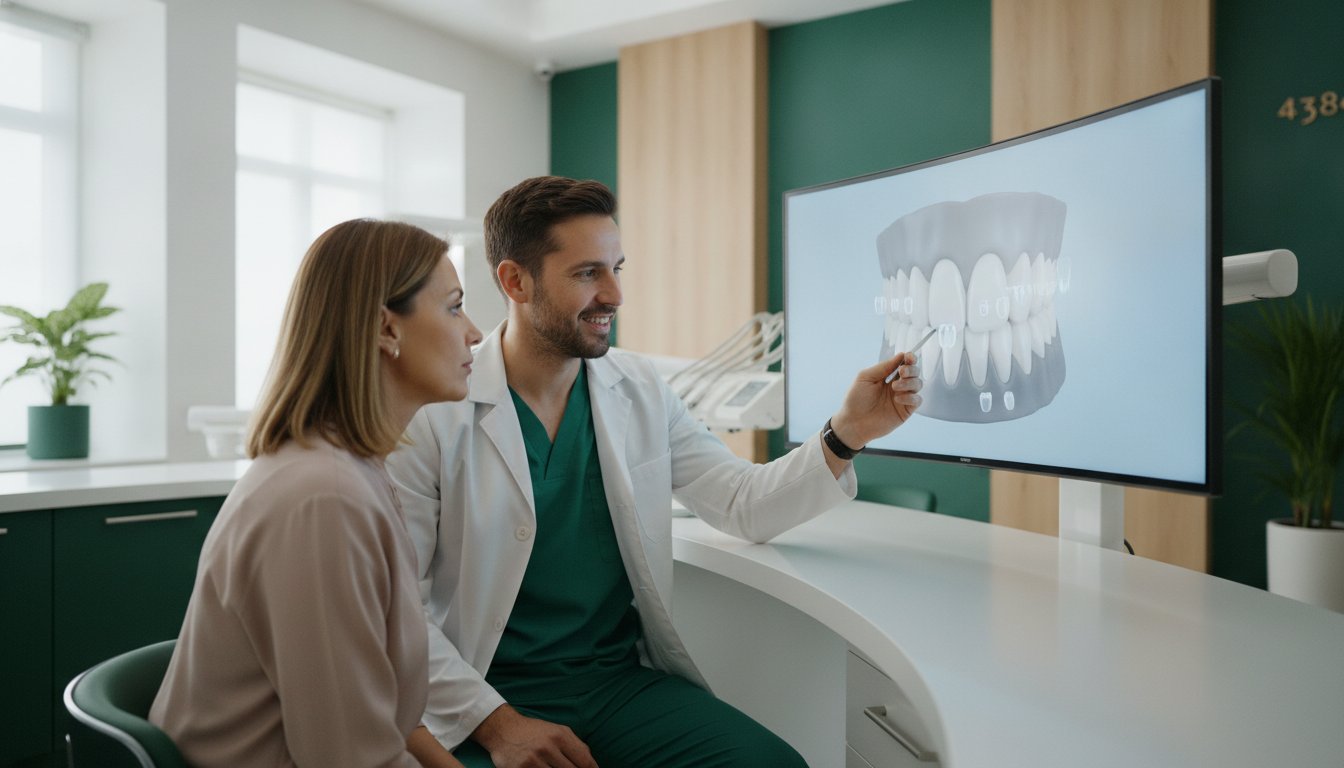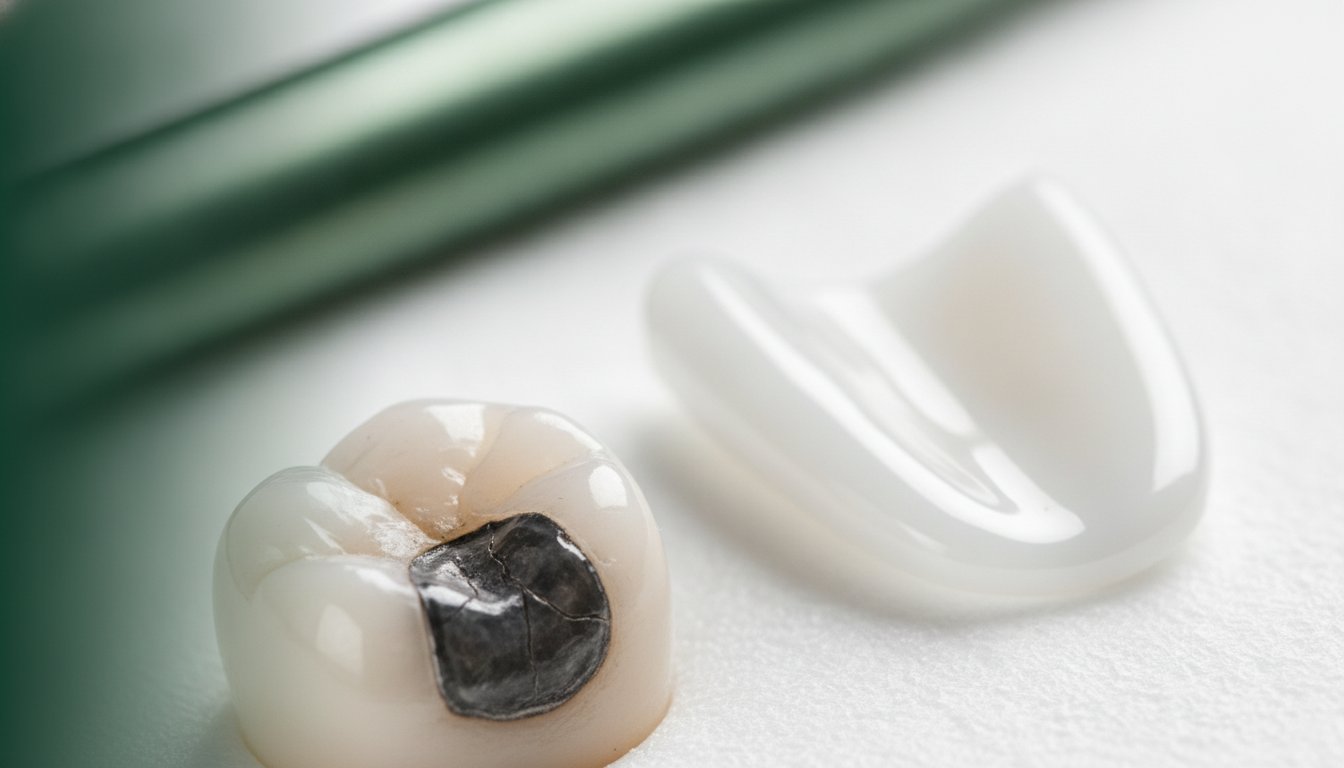

With roughly 15% of the population experiencing sensitivities to common metals, the traditional approach to tooth replacement is leaving millions in a state of silent, chronic inflammation. You shouldn't have to choose between a functional smile and your systemic well-being. It's natural to feel anxious about placing foreign materials in your body, especially when you prioritize long-term health and a seamless, organic aesthetic. Metal free dental implants represent a sophisticated evolution in restorative care. Clinical precision. Holistic safety. Aesthetic harmony.
Discover why zirconia has emerged as the gold standard for patients seeking systemic harmony and a naturally radiant smile. We believe your dental restorations should act as a wellness partner rather than a source of concern. This guide explores the intersection of technical excellence and biological safety. We'll examine the science of biocompatibility, the impressive fracture resistance of modern ceramics, and how these metal-free solutions ensure your immune system remains at peace while your smile reflects your inner vitality.
Key Takeaways
- Learn why high-performance zirconia is the modern benchmark for inert, biocompatible restorations that fuse seamlessly with your natural biology.
- Understand how metal free dental implants eliminate the risk of galvanic corrosion and ion release to protect your long-term systemic health.
- Discover the aesthetic and hygienic benefits of ceramic surfaces that prevent gray gumline shadows and naturally resist bacterial accumulation.
- Explore the essential role of Biocompatibility Testing and 3D Cone Beam imaging in ensuring your restoration harmonizes with your body.
- See how a holistic approach to dental restoration creates a foundation for both technical excellence and a naturally radiant smile.
The Evolution of Dental Restoration: Why Metal-Free is the New Standard
Modern restorative dentistry is undergoing a profound transformation. We are moving away from the era of mechanical replacement toward a standard of absolute biological harmony. For decades, the goal was simply to fill a gap. Today, the focus has shifted to how that replacement interacts with your entire body. This evolution has led to the rise of metal free dental implants, crafted from high-performance zirconia. Clinical precision. Holistic safety. These are the markers of a new era in care.
Zirconia, or zirconium dioxide, is a sophisticated ceramic material. While it's technically derived from a metal, its crystalline structure makes it entirely inert. It doesn't corrode. It doesn't conduct electricity. Most importantly, it doesn't trigger the reactive responses often associated with traditional alloys. By choosing a material that's crystalline rather than metallic, we prioritize systemic neutrality. This isn't just about a tooth; it's about your immune system's peace of mind.
The aesthetic advantage is equally compelling. Natural teeth are translucent; they allow light to pass through and reflect from within. Metal-free restorations mimic these light-transmitting properties perfectly. There are no dark margins at the gumline and no gray shadows beneath the surface. The result is a restoration that's virtually indistinguishable from nature, providing both functional excellence and refined beauty. It is an investment in your confidence and your health.
Beyond Traditional Titanium
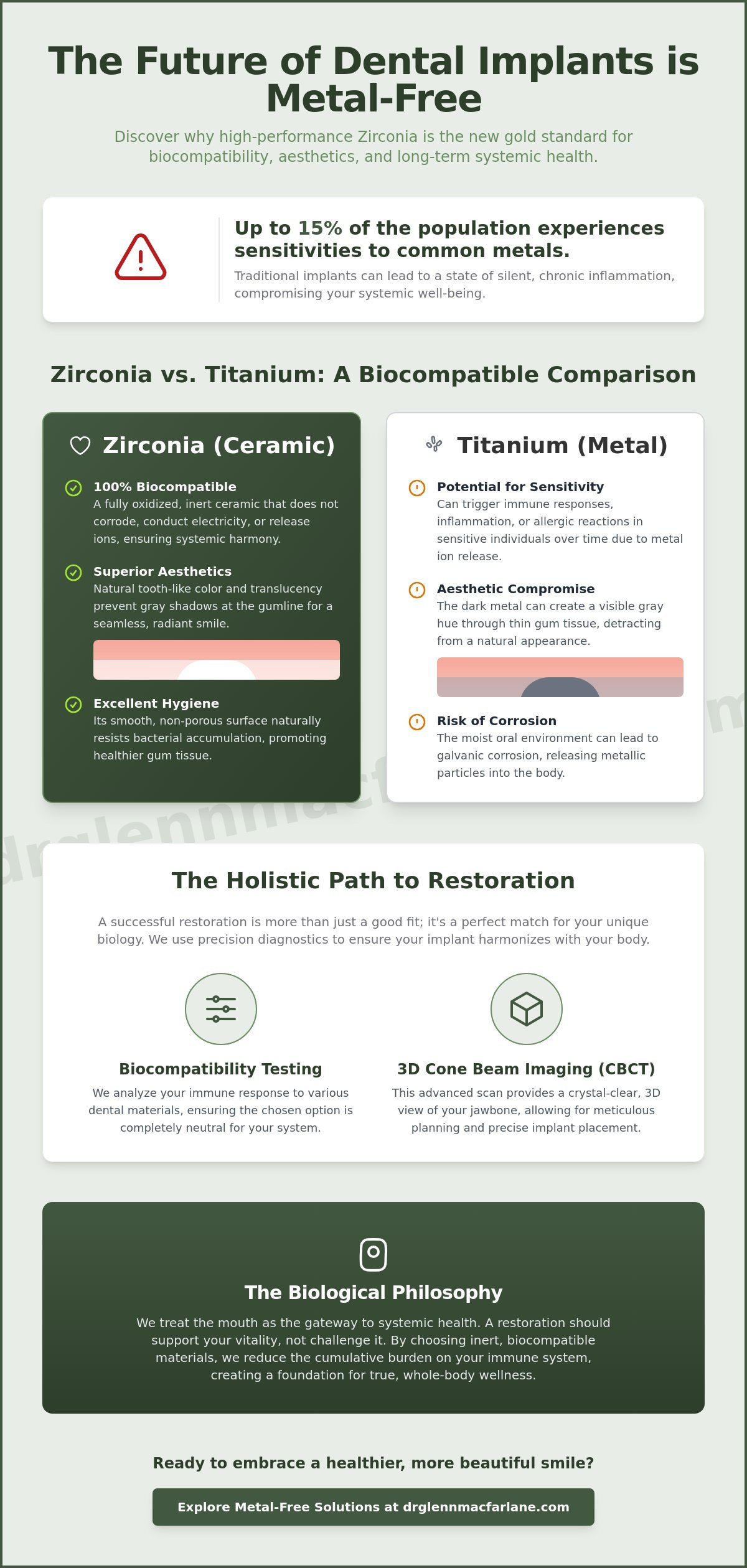
Titanium has served as the foundational dental implant material for many years. It was once considered the only reliable option for osseointegration. However, as our understanding of immunology has deepened, the limitations of metal have become clearer. Research suggests that approximately 10 to 15 percent of the population may have some degree of metal sensitivity. For these individuals, a titanium post can lead to chronic inflammation or localized tissue reactions. Opting for metal free dental implants removes these variables from the wellness equation.
The Biological Philosophy
In biological dentistry, we treat the mouth as the gateway to systemic health. Biocompatibility is not a luxury; it's a clinical requirement. Using inert materials like zirconia reduces the cumulative burden on the body’s immune system. We don't view a missing tooth as an isolated problem to be solved with a screw. Instead, we see it as an opportunity to restore a complex biological system. This philosophy ensures that your restoration supports your vitality rather than challenging it. It's a journey from mere repair to true wellness integration.
The Science of Zirconia: Biocompatibility and Systemic Health
Zirconia represents a peak of material science in modern dentistry. Although zirconium is classified as a transition metal on the periodic table, the zirconia used in dental restorations is a fully oxidized ceramic that behaves as a completely non-metallic, inert crystalline structure. This distinction is vital for patients who prioritize biological purity. You aren't just placing a replacement tooth; you're introducing a material that speaks the same language as your body's natural chemistry.
The success of any restoration depends on osseointegration, the process where the jawbone accepts and fuses with the implant. Evidence regarding the Survival Rate of Zirconia Versus Titanium Dental Implants suggests that zirconia achieves this fusion with remarkable reliability. Because zirconia is chemically inert, it doesn't corrode or release microscopic ions into the bloodstream. The bone accepts the microrough ceramic surface without the "foreign body" alarm bells often triggered by metallic alternatives. It remains stable, silent, and supportive within the jaw.
Your gums also show a clear preference for ceramic. Soft tissue attaches to zirconia more naturally than it does to metal, forming a tight biological seal that mimics the natural connection of a tooth to the gingiva. This surface is also incredibly smooth, which significantly reduces bacterial adhesion compared to titanium. By minimizing plaque accumulation at the source, metal free dental implants help maintain the health of the surrounding tissue and prevent the inflammation that can lead to bone loss.
Non-Conductive and Non-Corrosive Properties
The oral environment is uniquely challenging. It's moist, acidic, and constantly fluctuating in temperature. Traditional metal implants can act like tiny conductors, potentially creating "oral galvanism" or a battery effect when they interact with other metals in the mouth. Zirconia is entirely non-conductive. It doesn't transmit heat or electrical currents, ensuring your oral environment remains energetically neutral. This chemical stability means the material won't degrade or tarnish over time, protecting your systemic health from the byproduct of metal oxidation.
Immune System Neutrality
For the 10 to 15 percent of the population with metal sensitivities, material choice is a matter of long-term safety. Zirconia is hypoallergenic and exceptionally well-tolerated by the immune system. It doesn't provoke the chronic, low-grade inflammation that can occur when the body is constantly "on guard" against metallic intruders. This systemic peace of mind is why many patients choose to explore Zirconia Dental Implants as a foundational step toward total body wellness. By choosing a material that is naturally rejected by fewer bodies, you create a foundation for a restoration that is meant to last a lifetime.
Ceramic vs. Titanium Implants: Comparing Performance and Systemic Impact
Choosing between titanium and ceramic is more than a material preference. It's a choice between two distinct philosophies of restoration. While titanium has been the historical default, metal free dental implants offer a level of biological and aesthetic refinement that traditional alloys simply cannot match. This comparison isn't just about durability. It's about how the material behaves within the living ecosystem of your mouth. Scientific precision. Holistic harmony.
Aesthetic excellence is the most immediate difference. Titanium is inherently dark. If gum tissue is thin or recedes over time, a gray shadow or a metallic line often appears at the base of the tooth. Zirconia is naturally white and opaque. It mimics the light-transmitting properties of a natural tooth root. Even if the gumline shifts, the restoration remains beautiful and discreet. Refined beauty. Uncompromising safety.
Functionally, zirconia provides a cleaner environment. Its surface is significantly more resistant to bacterial colonization than titanium. Research indicates that ceramic surfaces accumulate less plaque, which reduces the risk of peri-implantitis, a leading cause of implant failure. Regarding strength, modern zirconia formulations have a flexural strength exceeding 1000 MPa. The myth that ceramic is brittle is outdated; these restorations are engineered to withstand the significant forces of chewing for a lifetime.
Aesthetic and Functional Harmony
The way light interacts with your smile defines its vitality. Because zirconia allows for natural light transmission, it avoids the flat look of metal-based crowns. The soft tissue response is also superior. Gums tend to stay healthier and more attached to ceramic, which prevents the recession often seen with metallic irritants. This superior periodontal health means your restoration doesn't just look better; it stays more stable over the years with less maintenance.
Systemic Health and Galvanism
One of the most overlooked risks of traditional dentistry is oral galvanism. This occurs when different metals in the mouth, such as titanium implants and older fillings, create a battery effect in the presence of saliva. This constant electrical current can disrupt the body's natural bio-electrical fields and potentially lead to unexplained sensitivities or headaches. Because metal free dental implants are non-conductive, this risk is entirely eliminated. Choosing zirconia is a vital step for those committed to a mercury-safe lifestyle and long-term systemic neutrality. It's about removing the electrical noise from your nervous system and allowing your body to function as nature intended.
Precision Diagnostics: Is a Metal-Free Implant Right for Your Biology?
Success in restorative dentistry is never a matter of chance. It is the result of a meticulous diagnostic process that honors your unique biological blueprint. When considering metal free dental implants, we move beyond the visual exam to explore the microscopic and structural realities of your health. This data-driven approach ensures that every restoration is as safe as it is beautiful. Scientific rigor. Personalized care.
3D Cone Beam (CBCT) imaging serves as the essential foundation for safe, predictable implant surgery by providing a high-resolution map of your unique anatomy. Unlike traditional two-dimensional X-rays, a CBCT scan allows us to visualize the jawbone in three dimensions. We can precisely measure bone density and map the exact location of nerves and sinus cavities. This clarity is vital when working with zirconia, as it allows for a placement strategy that maximizes stability while respecting the surrounding biological structures.
Digital surgical guides translate this 3D data into real-world precision. By using these custom-milled templates, we can place ceramic implants with micrometric accuracy. This level of control minimizes tissue disruption and supports a more comfortable recovery. It's a bridge between digital innovation and clinical excellence, ensuring the final result is perfectly integrated into your smile. If you are ready to see how advanced technology can transform your health, schedule your 3D Cone Beam Imaging consultation today.
Personalized Material Testing
In biological dentistry, we don't assume a material is safe just because it's widely used. We prioritize Biocompatibility Testing to confirm that your body will thrive with the selected materials. Using specialized blood tests like the MELISA test, we can identify specific immune sensitivities to various minerals and compounds. This customized approach ensures that your restoration supports your systemic vitality rather than adding to your body's immune burden. We choose the materials your body prefers.
Advanced 3D Planning
Modern diagnostics allow us to perform a "virtual surgery" before the actual procedure even begins. By integrating 3D imaging with sophisticated software, we can plan the exact depth, angle, and position of the implant in a digital environment. This accurate planning is directly connected to rapid healing. Because the surgery is guided and precise, there's less impact on the bone and soft tissue, allowing your body's natural regenerative processes to take over immediately. It's a more efficient, safer, and more predictable path to a permanent smile.
The Holistic Path to Restoration: Integrating Wellness and Aesthetic Excellence
True restoration is never just about a single tooth. It's about restoring the balance of your entire biological system. By choosing metal free dental implants, you're making a conscious decision to align your oral health with your body's natural rhythms. This choice sits at the heart of a larger systemic health framework, where every material and procedure is vetted for its impact on your long-term vitality. Organic values. Modern science. This is the hallmark of a refined approach to care.
Achieving this level of harmony requires more than just technical skill; it requires an expert guide who understands the deep interconnectedness of health. A practitioner who recognizes that the mouth is the gateway to the body. We don't just look for gaps to fill. Instead, we look for ways to enhance your systemic neutrality and aesthetic permanence. Your restorative plan is a bespoke roadmap, carefully designed to honor both the complex mechanics of your bite and the radiant, natural beauty of your smile. It's a journey from understanding a philosophy to trusting a specific, health-conscious methodology.
The Center for Holistic Dental Medicine Approach
Our practice bridges the gap between scientific precision and holistic warmth. We've spent decades refining a methodology that prioritizes the individual as a whole. This includes a strict commitment to mercury-safe protocols and the exclusive use of biocompatible materials. Experience matters. When you choose a provider deeply rooted in biological principles, you gain the confidence that your care is based on established wisdom and the latest innovations. This ensures that your metal free dental implants aren't just a dental service, but a life-changing experience that respects your immune system.
Your Journey to Systemic Harmony
Your journey begins with a comprehensive evaluation that looks far beyond the surface. We assess your unique biological needs, utilizing 3D Cone Beam Imaging and Biocompatibility Testing to ensure every step of your care is grounded in data. This initial holistic evaluation is a collaborative experience. We listen to your concerns, address your sensitivities, and build a foundation of long-term trust. We act as your wellness partner, dedicated to a result that feels as natural as it looks. The path to a healthy, vibrant smile is clear. Experience the future of biocompatible dentistry with Dr. MacFarlane.
Embrace Your Path to Systemic Harmony
Restoring your smile is a significant step toward total body wellness. By choosing metal free dental implants, you prioritize a material that respects your immune system and mimics the natural beauty of your teeth. Zirconia eliminates the risk of oral galvanism and provides a cleaner, more biocompatible foundation for long-term health. It's about more than just aesthetics. Systemic peace. Refined beauty.
Dr. MacFarlane has been practicing biological dentistry since 1985, bringing decades of wisdom to every patient journey. With SMART certified mercury-safe protocols and advanced 3D CBCT imaging available on-site, our practice provides the technical excellence your health deserves. We act as your expert guide, ensuring every restoration aligns with your unique biology. Schedule Your Holistic Implant Consultation Today to begin your transformation. Your vibrant, healthy future is waiting to be revealed.
Frequently Asked Questions
Are metal-free dental implants as strong as titanium ones?
Modern zirconia formulations are exceptionally strong, often exceeding 1000 MPa in flexural strength. This makes them highly resistant to fractures and capable of withstanding the significant pressure of daily chewing. While titanium was long considered the standard for durability, high-performance ceramics now provide a comparable level of structural integrity. You receive a restoration that is both biologically safe and physically resilient. Technical excellence. Long-term reliability.
Can I get zirconia implants if I already have metal fillings or crowns?
You can certainly receive zirconia implants even if you currently have metallic restorations. In fact, choosing metal free dental implants is a proactive step toward reducing the total metal burden in your mouth. Many patients use the implant process as a catalyst to transition toward a fully biocompatible oral environment. This shift helps minimize potential electrical interference and supports your goal of systemic harmony.
How long do metal-free ceramic implants typically last?
Ceramic implants are designed to be a permanent solution for tooth loss. Research indicates high success rates, with clinical studies showing a 97% success rate over a seven-year follow-up period. Like any restoration, their longevity depends on meticulous oral hygiene and healthy bone density. When properly maintained, these biocompatible structures can serve as a functional and aesthetic part of your smile for many decades.
Is the recovery time different for zirconia implants compared to metal?
The healing timeline for zirconia is generally comparable to titanium, though many patients report a smoother experience. Ceramic is exceptionally gentle on the soft tissues, which often allows the gums to heal more predictably around the implant site. Because the material is inert, the body's inflammatory response is often lower. This supportive biological interaction can lead to a more comfortable and efficient recovery period.
What is oral galvanism, and how do metal-free implants prevent it?
Oral galvanism is a "battery effect" that occurs when dissimilar metals in the mouth interact with saliva to create a constant electrical current. This phenomenon can disrupt the body's natural bio-electrical signals and cause unexplained sensitivities. Since metal free dental implants are made of non-conductive ceramic, they cannot participate in this electrical activity. Choosing zirconia ensures your oral environment remains energetically neutral and silent.
Are there any specific risks associated with ceramic dental implants?
While modern zirconia is incredibly durable, earlier generations of ceramic implants faced a slightly higher risk of fracture compared to metal. Advancements in material science have largely addressed these concerns. The primary requirement for success is the skill of the practitioner, as ceramic placement requires specific surgical protocols. Ensuring your provider uses high-quality, FDA-approved systems and 3D planning is the best way to mitigate any potential risks.
How do I know if I have a sensitivity to titanium or other dental metals?
Identifying a metal sensitivity often requires specialized diagnostic testing rather than a standard skin patch test. We utilize Biocompatibility Testing, such as the MELISA test, to detect how your white blood cells react to specific metals at a systemic level. If you experience chronic inflammation, unexplained skin rashes, or fatigue after dental work, it may indicate a sensitivity. This data-driven approach removes the guesswork from your treatment plan.
Will insurance cover the cost of metal-free dental implants?
Coverage varies significantly depending on your specific insurance provider and plan details. Many insurance companies now recognize zirconia as a standard restorative material and provide a similar level of reimbursement as they would for titanium. We recommend contacting your carrier to verify your "out-of-network" or "specialty material" benefits. Our team can provide the necessary clinical documentation to help you maximize your available dental insurance benefits.