Did you know that traditional dental amalgam fillings are composed of approximately 50% mercury by weight? It is a staggering reality that has led the Indian Health Service to announce a total phase-out of these materials by 2027. You likely feel a growing sense of unease regarding the metals and chemicals residing in your mouth. Whether it is anxiety over mercury exposure or confusion about BPA in white fillings, your concern for your systemic health is valid and wise. Safety first. Aesthetic excellence always.
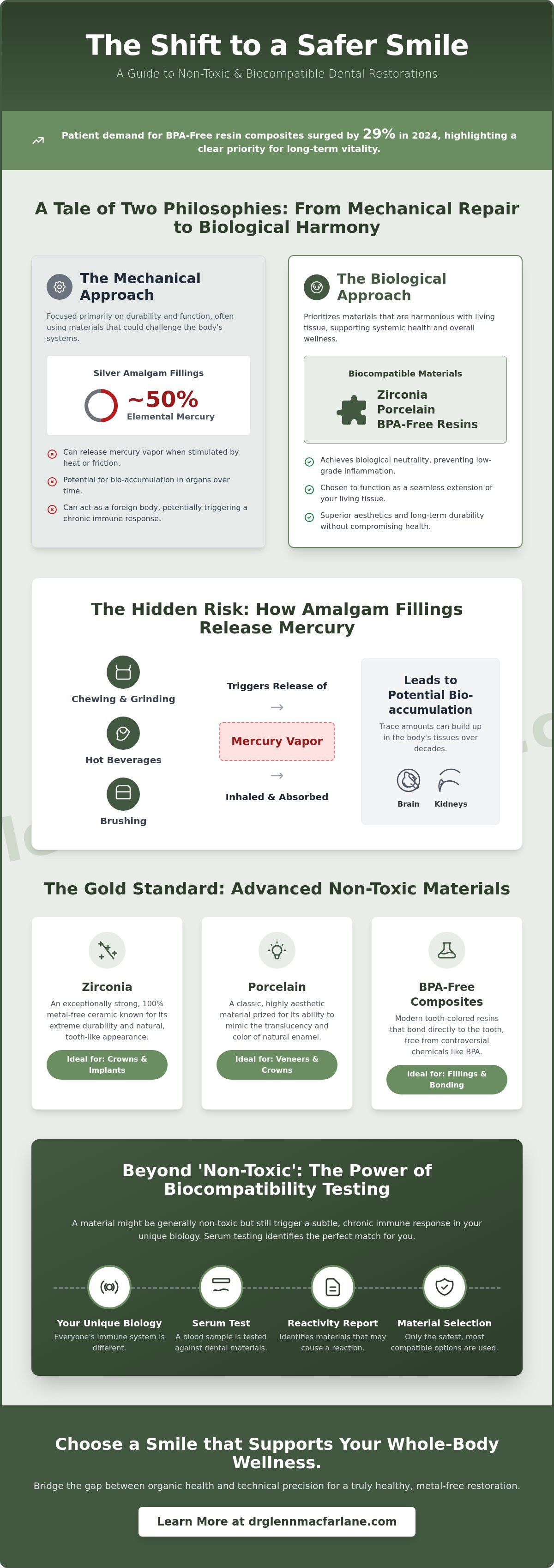
This guide reveals how sophisticated, non-toxic dental restoration materials protect your systemic wellness and provide a harmonious, metal-free alternative to traditional restorations. With the demand for BPA-free resin composites rising by 29% in 2024, it is clear that patients are prioritizing their long-term vitality. You will discover the essential differences between biocompatible and traditional materials, learn how Biocompatibility Testing verifies material safety for your unique biology, and find a clear path toward a metal-free restoration. We bridge the gap between organic health and technical precision to ensure your smile supports your whole body. True wellness begins with a foundation of systemic harmony and refined care.
Key Takeaways
- Learn how the evolution from mechanical dentistry to biological care prioritizes materials that remain harmonious with your body's living tissue.
- Identify the hidden systemic risks of silver amalgam and understand how heat and friction can trigger the release of elemental mercury vapor.
- Discover the superior durability and aesthetic elegance of non-toxic dental restoration materials like zirconia and porcelain for metal-free crowns and implants.
- Understand the vital role of individual serum biocompatibility testing in selecting materials that align perfectly with your unique immune profile.
- Explore the benefits of a biomimetic approach, focusing on conservative treatments that restore the natural function and structural integrity of your teeth.
The Philosophy of Biocompatibility: What are Non-Toxic Dental Restoration Materials?
The evolution of modern dentistry has moved beyond the simple repair of a damaged tooth. For decades, the focus remained strictly on mechanical success: how long a filling would last or how well a crown could withstand the force of chewing. Today, a more refined approach takes center stage. We now recognize that the mouth is a dynamic, living environment. Choosing non-toxic dental restoration materials is no longer just an alternative; it's a fundamental pillar of systemic wellness. Precision meets peace of mind. Safety first. Excellence always.
While "non-toxic" serves as a necessary baseline, "biocompatible" represents the true professional standard. A material might be non-toxic in a general sense but still trigger a subtle, chronic immune response in a specific individual. We look for materials that achieve biological neutrality. This prevents the low-grade inflammation that can tax your immune system over time. It's a shift from treating the tooth as a machine to treating the patient as a complex, interconnected ecosystem. This philosophy ensures your body's resources are spent on health and repair rather than fighting off a dental restoration.
Defining Biocompatibility in Modern Dentistry
Biocompatible materials are designed to function as a seamless extension of your living oral tissues. Unlike inert substances that simply take up space, these advanced materials are selected for their ability to coexist within your unique biochemistry. For a comprehensive overview of dental materials, one can see how physical properties must balance with biological safety. Biocompatibility is the body's acceptance of a material without rejection. This acceptance ensures that your restoration supports healing rather than acting as a foreign invader. It's about finding harmony between technical excellence and organic health.
The Systemic Connection: Why Your Mouth is the Gateway to Wellness
Your mouth is the most visible part of your internal health. Because the oral mucosa is highly vascular, substances placed in the mouth can eventually find their way into the bloodstream. This leads to the concept of bio-accumulation, where trace amounts of dental toxins can build up in the body's tissues over several decades. A biological dentist acts as a wellness partner in this journey. They prioritize non-toxic dental restoration materials to minimize the total toxic load on your body. By understanding this oral-systemic link, we can choose restorations that promote long-term vitality and aesthetic harmony. Your smile shouldn't just look healthy; it should support your entire body's well-being.
The Traditional Dilemma: Identifying Toxins in Conventional Restorations
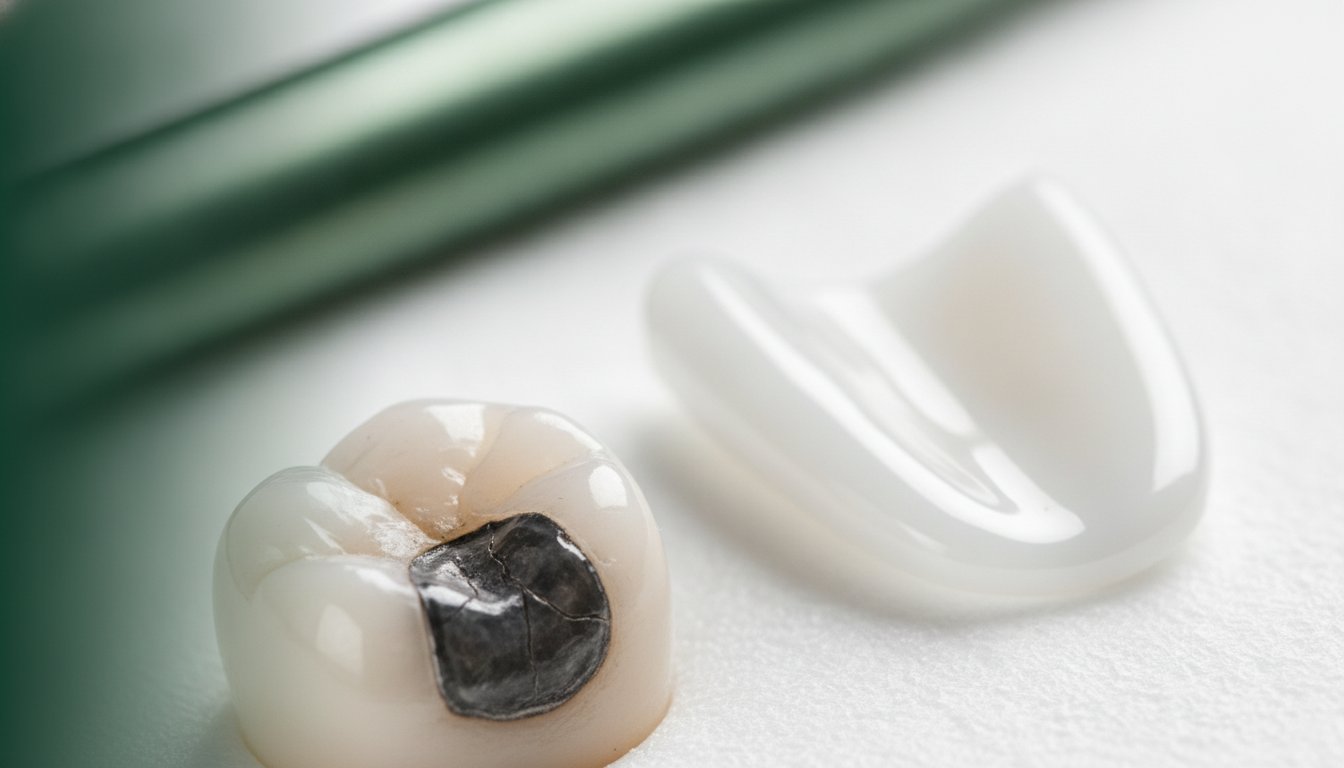
Understanding the necessity of non-toxic dental restoration materials begins with an honest look at the legacy of traditional dentistry. For over 150 years, silver amalgam was the primary choice for durability and ease of use. Despite the name, these fillings are roughly 50% elemental mercury by weight. While they are physically strong, their biological profile is far more complex. We believe in transparency and safety. Your health deserves a foundation that supports your entire system rather than challenging it. Precision meets peace of mind.
The Reality of Mercury Amalgam and Vapor Release
Mercury is a liquid metal that vaporizes at room temperature. When you chew, brush your teeth, or enjoy a hot beverage, these old restorations can release low levels of mercury vapor. This vapor is easily inhaled and absorbed into the bloodstream. The FDA on amalgam fillings suggests that certain populations should avoid this material due to potential accumulation in vital organs like the kidneys and brain. It's a silent process that occurs over decades.
There is a critical distinction between a practice being mercury-free and one that is mercury-safe. Many offices no longer place amalgam, yet they may not use specialized protective equipment when removing it. Without proper barriers and high-volume suction, drilling out an old filling can create a significant aerosol of mercury particles. Our commitment to your wellness involves the SMART protocol for mercury removal. This rigorous standard protects you from unnecessary exposure during the transition to safer alternatives. Safety first. Excellence always.
Beyond Metal: The Truth About Bisphenol A (BPA) in Composites
Modern aesthetics often lead patients toward tooth-colored composite resins. It's a beautiful way to restore a smile. However, not all composites are created equal. Standard resins often contain Bisphenol A (BPA) or its derivatives like Bis-GMA. These substances can leach out over time and interfere with the endocrine system. They act as "xenoestrogens," essentially confusing your body's natural hormonal signals and potentially triggering chronic immune inflammation.
Choosing non-toxic dental restoration materials means looking past the surface. We select high-grade, BPA-free resins that offer both technical excellence and biological neutrality. If you're concerned about the materials currently in your mouth, exploring Biocompatibility Testing is a proactive step toward systemic harmony. This ensures that every material we use is a perfect match for your unique immune system, bridging the gap between organic health and scientific precision.
The Gold Standard: A Guide to Advanced Non-Toxic Materials
The search for the ideal restorative material has culminated in a new era of ceramic and resin excellence. We no longer have to choose between structural strength and biological safety. By utilizing advanced non-toxic dental restoration materials, we achieve a level of biological harmony that was previously impossible. These materials don't just fill gaps. They restore vitality. Precision meets peace of mind. Safety first. Aesthetic excellence always.
Selecting the right materials involves a careful balance of functional needs and aesthetic goals. Whether you require a full reconstruction or a simple conservative filling, modern solutions provide the biological neutrality your system requires. We bridge the gap between technical excellence and organic wellness. This is the gold standard of care, where every restoration is chosen for its ability to support your long-term health and your most confident smile.
Zirconia and Porcelain: The Metal-Free Aesthetic Leaders
Zirconia has emerged as the ceramic powerhouse of modern restorative care. It offers incredible fracture toughness and resistance to wear, rivaling the strength of traditional metals without the systemic risks. Beyond its durability, the benefits of Zirconia dental implants include a complete absence of metal, eliminating the risk of galvanic currents or allergic reactions. It is a material that truly respects your biology.
Porcelain remains the premier choice for veneers and high-aesthetic areas due to its light-reflecting properties. It perfectly mimics the translucency of natural enamel. Unlike metal-based crowns, ceramics possess low thermal conductivity. This means you'll experience significantly less sensitivity to hot and cold temperatures. It's a more comfortable, natural sensation that feels like your own tooth. There are no dark lines at the gumline, only seamless, healthy beauty.
High-Grade BPA-Free Composites for Conservative Care
For smaller restorations, we turn to high-grade, BPA-free composite resins. These aren't your standard plastic fillings. These are diamond-filled or ceramic-reinforced materials designed for lasting durability. The Biocompatibility of Dental Materials is a central focus when selecting these resins, ensuring they remain inert and non-reactive within your oral environment. We prioritize systemic safety in every layer.
We use a biomimetic bonding process for these restorations. This method allows us to preserve more of your natural tooth structure by creating a chemical bond that mimics the flex and wear of real enamel. These non-toxic dental restoration materials behave like natural tooth tissue, distributing chewing forces evenly. It's conservative care powered by cutting-edge science, ensuring your teeth remain strong and functional for years to come.
Precision Personalization: The Role of Biocompatibility Testing
The core truth of biological dentistry is that no single material is 100% safe for every human being. Even when we utilize premium non-toxic dental restoration materials, your unique immune system remains the final arbiter of success. What is restorative for one patient might be reactive for another. We move beyond general assumptions to achieve true precision. Safety first. Excellence always.
By utilizing individual serum biocompatibility testing, such as Clifford Materials Reactivity Testing, we can identify exactly which components your body accepts. This is not a "one size fits all" approach. Your blood chemistry provides a definitive roadmap. It allows us to select materials that integrate seamlessly with your physiology, ensuring your dental work supports your systemic health rather than challenging it. We eliminate the uncertainty of trial and error in restorative care. Precision meets peace of mind.
Why Safe Is Not Universal: Understanding Individual Immune Responses
Some patients experience what is known as Type IV delayed hypersensitivity. This is a subtle immune reaction where the body slowly develops a sensitivity to a dental material over time. These reactions aren't always immediate. They can manifest as chronic fatigue, skin issues, or even autoimmune flares as the body remains in a constant state of low-grade defense. Personalized testing ensures the restoration supports, not depletes, health. By screening for these specific reactions, we protect your systemic harmony from the start.
The Process of Dental Material Testing
The journey to personalized safety begins with a simple blood draw. This sample is screened against thousands of different dental products, including cements, bonding agents, and crown materials. The resulting report is a comprehensive guide for your clinical team. It categorizes materials based on your specific immune reactivity. This data-driven approach allows us to choose the most compatible non-toxic dental restoration materials for your biological profile. It's about bridging the gap between organic health and technical excellence.
This testing is the ultimate step in sophisticated, health-conscious care. It provides a level of safety and refinement that standard dentistry simply cannot match. If you're ready to ensure your next restoration is a perfect biological match, we invite you to schedule your Biocompatibility Testing today. It's a commitment to your long-term vitality and a refined, worry-free smile. We look beyond immediate symptoms to treat the individual as a whole.
Restoring Harmony: Your Journey to a Healthier Smile
Restoring a tooth is an act of preservation, not just repair. Once we have identified the ideal non-toxic dental restoration materials for your unique biology, the focus shifts to the physical architecture of your smile. We believe that every restoration should function as a natural extension of your body. This requires a departure from traditional "mechanical" dentistry toward a more refined, biological perspective. Precision meets peace of mind. Safety first. Aesthetic excellence always.
The goal is to restore the tooth to its natural functional state while minimizing trauma to the surrounding tissues. During this delicate process, ozone therapy serves as a vital tool for natural disinfection. It eliminates bacteria and pathogens without the use of harsh chemicals, ensuring a sterile foundation for your new restoration. We bridge the gap between organic health and technical excellence, creating a smile that supports your entire system.
The Biomimetic Approach to Structural Integrity
The biomimetic philosophy focuses on replicating the tooth's natural stress distribution. Traditional dentistry often relies on aggressive drilling to create mechanical retention for a filling or crown. This can weaken the tooth's foundation and lead to future fractures. In contrast, we utilize advanced bonding techniques with non-toxic dental restoration materials to mimic the way natural enamel and dentin work together. It is a sophisticated way to rebuild what was lost.
We prioritize conservative treatments like inlays and onlays over aggressive crowning whenever possible. These restorations fit into the tooth like a puzzle piece, preserving as much natural enamel as we can. This approach significantly reduces the need for future root canals by maintaining the tooth's internal integrity and pulp health. You keep more of your natural tooth, and your body benefits from a restoration that flexes and wears just like the real thing. It is restorative care that respects your biology.
Transitioning to Biocompatible Care
The journey toward a metal-free smile is a marathon, not a sprint. When transitioning to biocompatible care, we often advise prioritizing the replacement of the most reactive or toxic restorations first. This is typically based on the results of your earlier testing and the age of your existing fillings. We look beyond immediate symptoms to treat the individual as a whole, ensuring each step of the process is logical and safe. Your wellness is our steady guide.
Supporting your body during this transition is equally important. Many patients find that nutritional support and gentle detox protocols help the body process any legacy toxins released during the removal of old materials. Partnering with a practitioner who values systemic harmony ensures that your dental work is a catalyst for health, not a burden on it. Long-term maintenance of these restorations is simple yet vital. With regular care and a commitment to systemic wellness, your biocompatible smile will provide a lifetime of functional and aesthetic excellence. True wellness begins with a foundation of refined, health-conscious care.
Elevating Your Health Through Biocompatible Innovation
Your dental choices resonate far beyond the surface of your smile. By embracing non-toxic dental restoration materials, you are choosing a path that respects your body's complex biochemistry and long-term vitality. From the technical precision of Zirconia to the biological neutrality of BPA-free resins, modern dentistry offers a seamless bridge between aesthetic excellence and organic wellness. We believe that every restoration should be a contribution to your overall health, not a challenge to your immune system. Safety first. Excellence always.
Our practice brings over 40 years of clinical excellence to your care. We utilize SMART Certified Mercury-Safe removal and advanced Biocompatibility Testing protocols to ensure every material we select is a perfect biological match for your unique system. This commitment to safety and refinement ensures your results are both functional and harmonious. Begin your journey toward systemic harmony with a biocompatible consultation at The Center for Holistic Dental Medicine. Your health is an interconnected masterpiece. We look forward to helping you protect it with confidence and calm, professional wisdom. Your vitality is our priority.
Frequently Asked Questions
Are non-toxic dental fillings as strong as traditional metal ones?
Modern biocompatible materials are engineered to meet or exceed the durability of traditional metal. High-grade ceramics and diamond-filled resins provide the structural integrity needed to withstand daily chewing forces. While amalgam was once favored for its strength, these advanced non-toxic dental restoration materials offer superior bonding and fracture resistance. They integrate with the tooth's natural structure rather than just filling a hole, creating a more resilient, long-lasting result. Precision meets durability.
How do I know if my current dental fillings are toxic?
Visual identification is the first step, as any dark, silver-colored filling is likely a mercury amalgam. These restorations typically contain about 50% elemental mercury. Beyond aesthetics, older "white" fillings may contain BPA or endocrine disruptors. We use digital imaging and clinical exams to evaluate the age and condition of your restorations. This assessment helps determine if your current materials are challenging your systemic health or showing signs of structural failure.
What is the difference between mercury-free and mercury-safe dentistry?
Mercury-free simply means a practice no longer places new silver fillings. Mercury-safe dentistry is a much higher standard that utilizes the SMART protocol to protect you from toxic vapor during the removal of old amalgam. This involves high-volume suction, specialized barriers, and air filtration to prevent ingestion or inhalation of mercury particles. It is a commitment to your safety during the transition to more biocompatible alternatives. Safety first. Excellence always.
Does insurance cover the cost of non-toxic dental restoration materials?
Most insurance plans provide some level of coverage for basic restorations, though the specific amount depends on your individual policy. While some providers may only cover the cost of traditional materials, many are recognizing the value of composite and ceramic options. You should check with your provider to see how they categorize biocompatible materials. We provide detailed documentation to help you maximize any benefits available for your health-conscious dental care.
Can I be allergic to the materials used in "white" fillings?
Yes, it is possible for individuals to develop sensitivities or allergic reactions to specific components in standard composite resins. Even materials marketed as "safe" can trigger chronic immune inflammation in certain biological profiles. This is why we prioritize non-toxic dental restoration materials that are free from BPA and Bis-GMA. If you have a history of allergies or chemical sensitivities, we can identify exactly which materials your body accepts through personalized testing.
What is biocompatibility testing and do I really need it?
Biocompatibility testing is a blood-based screening that identifies which dental products are most compatible with your unique immune system. While not every patient requires it, it is highly recommended for those with existing autoimmune conditions or multiple chemical sensitivities. This data-driven approach removes the guesswork from your treatment. It ensures that every cement, bond, and crown material we use supports your systemic wellness and provides peace of mind. Precision meets personalization.
How long do Zirconia or porcelain restorations typically last?
With proper care and maintenance, Zirconia and porcelain restorations are designed to last 10 to 15 years or longer. These materials are incredibly resistant to wear and staining, often outperforming traditional metal-based options in the long term. Their durability is enhanced by the precision of modern bonding techniques that preserve your natural tooth structure. Regular clinical visits and a focus on oral hygiene ensure your restorations remain functional and aesthetically beautiful for over a decade.
Can non-toxic materials be used for root canal treatments?
Any necessary endodontic work can be enhanced with biocompatible sealers and ozone therapy to promote a healthier environment. We utilize materials that are designed to be non-reactive and supportive of the surrounding tissues. Our primary goal is always to preserve your natural tooth through a biomimetic approach that minimizes the need for aggressive procedures. When complex care is required, we select the safest materials available to maintain your systemic harmony and long-term health.