
What if the persistent brain fog or unexplained fatigue you're experiencing isn't a mystery, but a silent signal from your dental history? For many, the search for answers leads to a frustrating cycle of conflicting advice and clinical dead ends. If you've been questioning the long-term impact of your silver dental restorations, you aren't alone. Understanding the systemic symptoms of mercury poisoning from fillings is the first step toward reclaiming your health. With the 153 parties of the Minamata Convention on Mercury committing to a global phase-out by 2034, the conversation around dental safety has never been more vital.
We recognize that your health is an intricate, interconnected system where every material matters. You deserve a partner who looks beyond the surface to find the root cause of your concerns. This clinical guide provides a clear framework to help you recognize the subtle signs of mercury bioaccumulation across different body systems. We'll explore why these symptoms often surface years after a procedure and provide a sophisticated, safe roadmap for transitioning to biocompatible alternatives through SMART amalgam removal. It's time to move from uncertainty to a place of calm confidence and systemic harmony.
Key Takeaways
- Discover the science of mercury off-gassing and how daily friction from chewing or hot liquids can accelerate vapor release within the oral cavity.
- Identify the neurological and emotional symptoms of mercury poisoning from fillings, ranging from subtle coordination shifts to persistent cognitive "fog."
- Understand why individual sensitivity varies by exploring the "Bucket Theory" of toxicity and the role of genetic factors in heavy metal detoxification.
- Learn why standard blood tests often fail to detect long-term bioaccumulation and which advanced diagnostic pathways offer more clinical clarity.
- Gain a clear roadmap for safe restoration using the SMART protocol to protect your systemic harmony during the transition to biocompatible materials.
The Science of Dental Amalgam: Understanding Mercury Vapor Release
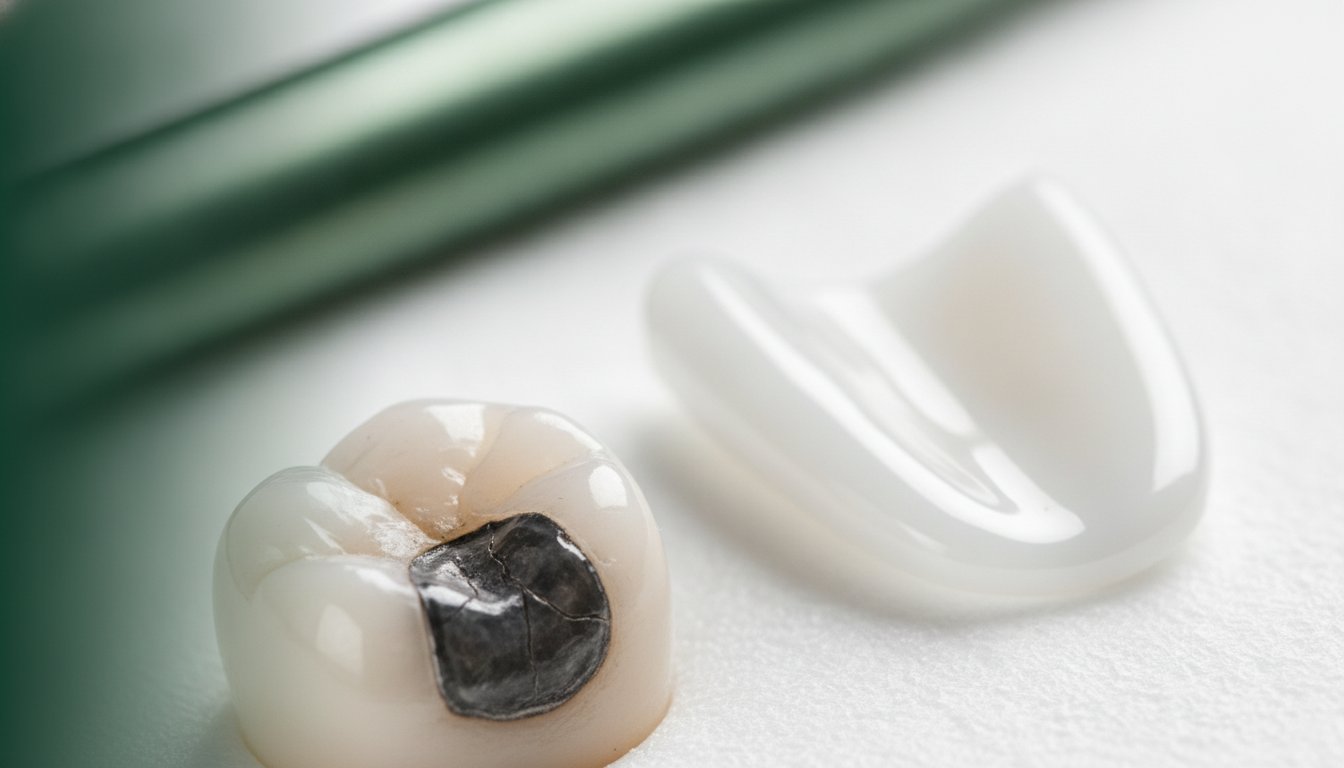
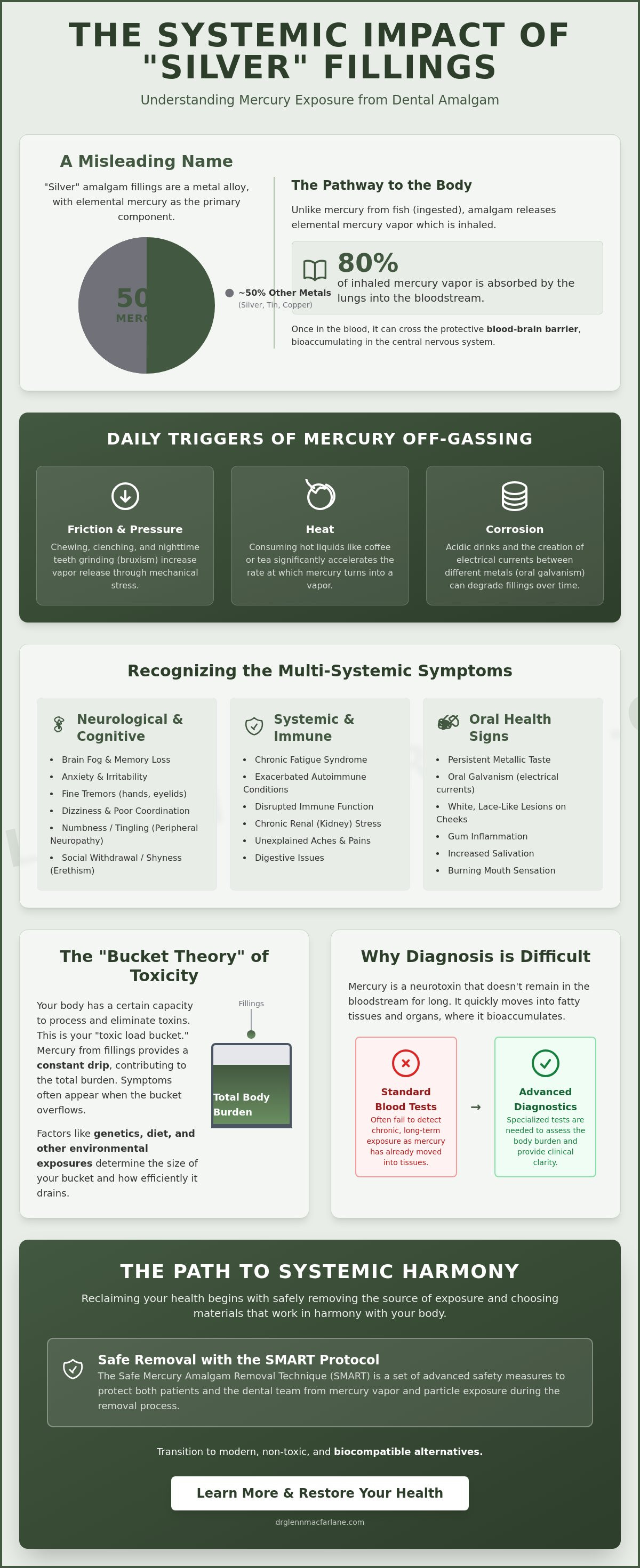
Dental amalgam is often called "silver fillings," but the name is a clinical misnomer. These restorations are an alloy containing roughly 50% elemental mercury, combined with silver, tin, and copper. While valued for decades for its durability, this material is not chemically stable. It is dynamic. It is reactive. Unlike the methylmercury found in fish, which is processed through the digestive system, dental amalgam releases elemental mercury vapor directly into the oral cavity.
This distinction is vital for understanding the Dental Amalgam Controversy. Inhalation is a far more efficient pathway for toxicity than ingestion. When mercury vapor is inhaled, the lungs absorb approximately 80% of it into the bloodstream. Once in the blood, it possesses the unique ability to cross the blood-brain barrier, settling into the central nervous system. This direct access to neural tissue explains why the neurological symptoms of mercury poisoning from fillings can be so profound and varied.
The Continuous Emission Myth
There is a common misconception that mercury only escapes when a filling is first placed. Clinical reality suggests a different story. Mercury release is a lifelong process. As fillings age, they can corrode and develop micro-cracks, which often increases the rate of vapor emission over time. This creates a steady contribution to your "body burden," a term describing the sum of all environmental exposures your system must process. It's not about a single event; it's about cumulative bioaccumulation and the long-term impact on your systemic health.
Daily Triggers for Mercury Off-Gassing
Mercury off-gassing is a temperature-dependent chemical process where mercury transitions from a solid or liquid state into a gas. Every day, routine actions act as catalysts for this release. Friction and heat are the primary drivers. For patients who struggle with bruxism, or chronic teeth grinding, the mechanical stress can significantly elevate vapor levels. Similarly, the ritual of a morning coffee or the consumption of acidic, carbonated beverages can accelerate the degradation of the amalgam's surface. These daily spikes mean that the symptoms of mercury poisoning from fillings aren't just a static baseline but a fluctuating response to your lifestyle and habits. Understanding these triggers is the first step toward restoring systemic harmony and choosing a more biocompatible path forward.
Recognizing the Multi-Systemic Symptoms of Mercury Poisoning
Mercury is a highly mobile neurotoxin. It does not stay confined to the tooth. Once it enters the bloodstream, it seeks out fatty tissues and vital organs. The kidneys, in particular, act as a primary filtration site where mercury can accumulate, leading to chronic renal stress. The body works hard. It tries to adapt. However, the FDA Recommendations on Dental Amalgam highlight that certain groups, including those with pre-existing kidney conditions, face higher risks. Recognizing the symptoms of mercury poisoning from fillings requires looking at the body as a unified whole rather than a collection of isolated parts.
The Neurological Impact: Beyond Simple Tremors
Clinicians have long identified a condition called erethism. It is a specific cluster of neuropsychological changes. This isn't just feeling a bit stressed. It is a profound shift toward social withdrawal, intense shyness, and sudden irritability. Patients often experience fine tremors in the hands or eyelids. Dizziness and changes in gait are common. You might feel off-balance. Peripheral neuropathy, which manifests as numbness or tingling in the hands and feet, is also a frequent indicator of heavy metal burden. Cognitive markers like brain fog and memory loss create a persistent barrier to daily productivity.
Systemic and Oral Health Connections
Your mouth is an early warning system. Many patients report a persistent metallic taste. This phenomenon is often caused by oral galvanism. Different metals in the mouth create small electrical currents. This accelerates mercury release. You might also notice oral lichenoid lesions, which look like white, lace-like patches on the inner cheeks. These are more than local irritations. They represent a systemic inflammatory response. Mercury can disrupt the immune system and exacerbate autoimmune conditions. Chronic fatigue syndrome is a frequent companion to this toxicity.
Adopting the perspective of what is a biological dentist allows us to see how these oral indicators correlate with systemic inflammation and long-term wellness. If you suspect your dental history is impacting your current health, exploring biocompatible health solutions can provide the clarity and safety you need. This holistic approach ensures that we treat the individual, not just the symptom, fostering a state of lasting harmony and refined health.
Why Sensitivity Varies: Bioaccumulation and Individual Risk Factors
Clinical experience reveals a striking pattern. Two patients may have an identical number of dental restorations, yet their systemic responses differ profoundly. One remains apparently asymptomatic. The other struggles with a complex array of neurological and physical challenges. This discrepancy is best explained by the "Bucket Theory" of toxicity. Each person possesses a unique biological capacity to manage environmental stressors. Your "bucket" represents your total toxic load. When the input from dental vapors, diet, and pollution exceeds your body’s ability to process them, the bucket overflows. This is when the symptoms of mercury poisoning from fillings typically manifest.
Bioaccumulation occurs when the rate of intake exceeds the body’s ability to excrete. It is a slow, quiet process. Mercury does not always cause an immediate reaction. Instead, it settles into tissues, waiting for a moment of systemic vulnerability. While the FDA highlights risks for pregnant women and children, we must also consider those with compromised immune systems or chronic inflammatory conditions. For these individuals, even a small, steady release of vapor can be the catalyst for systemic disharmony.
The Role of Detoxification Pathways
Your internal filtration system dictates your resilience. The liver relies on glutathione, the body’s master antioxidant, to neutralize and escort heavy metals out of the system. If glutathione levels are depleted due to chronic stress or poor nutrition, mercury remains trapped. Specific nutrient deficiencies, particularly selenium and zinc, further exacerbate this issue. Selenium acts as a biological magnet for mercury; when it is diverted to bind with the metal, it is no longer available for vital enzyme functions. This creates a secondary layer of metabolic dysfunction that complicates the clinical picture.
Genetics play a definitive role in this process. Variations in the MTHFR and APOE genes can significantly impair a person’s natural detoxification efficiency. Those with certain APOE genotypes, for instance, may have a reduced ability to clear mercury from the central nervous system. This genetic blueprint explains why some individuals are "hyper-responders" to even low levels of exposure. To understand your unique risk, biocompatibility testing offers a sophisticated way to assess how your system interacts with various dental materials.
Environmental and Lifestyle Additives
Mercury rarely acts in isolation. It often participates in synergistic toxicity, where the presence of one metal amplifies the harm of another. When mercury interacts with lead or aluminum, the combined neurotoxic effect can be significantly higher than the sum of its parts. Daily habits also influence the "fill level" of your toxic bucket.
- Dietary Choices: Frequent consumption of high-mercury seafood like swordfish or tuna adds to the cumulative burden.
- Occupational Exposure: Individuals working in industrial or laboratory settings may face higher ambient levels of heavy metals.
- Gut Health: A compromised microbiome can lead to the reabsorption of mercury that was intended for excretion, a process known as enterohepatic recirculation.
By addressing these individual risk factors, we move beyond generic lists and toward a refined, patient-centric understanding of systemic health. Recognizing that your body's response is unique is the first step toward a safe and effective recovery path.
Beyond the Symptoms: Diagnostic Pathways and Biocompatibility
Identifying the symptoms of mercury poisoning from fillings is an essential first step. However, clinical validation requires a more sophisticated approach than a standard physical exam. Many patients feel discouraged when routine blood work returns "normal" results despite their persistent fatigue or neurological concerns. This happens because elemental mercury is highly transient in the bloodstream. It moves quickly into the brain, kidneys, and liver, hiding within the tissues where standard tests cannot reach. To find real answers, we must look deeper.
Advanced diagnostic tools provide a clearer picture of your body burden. Hair Tissue Mineral Analysis (HTMA) offers a non-invasive look at mineral patterns and heavy metal excretion over several months. For a more direct measurement of stored toxins, a urine provocation test involves using a chelating agent to "pull" metals from the tissues for analysis. These methods help us move beyond guesswork. They allow us to create a data-driven strategy for your recovery. By working with a biological dentist and a functional medicine practitioner, you ensure that your detoxification process is as refined and safe as your dental care.
Testing for Sensitivity vs. Toxicity
It is important to distinguish between the presence of mercury and your immune system's specific reaction to it. Some patients are "hyper-responders" who experience intense symptoms even with low levels of exposure. We utilize biocompatibility testing, such as the Clifford Materials Reactivity Test, to screen your blood against thousands of dental components. This ensures that any replacement materials, like mercury-free composite fillings or zirconia dental implants, are harmonious with your unique chemistry. Understanding your specific sensitivities is a core part of our Safe Mercury Filling Removal philosophy.
Preparing for a Holistic Consultation
Your journey toward systemic harmony begins with the right questions. When choosing a practitioner, ask about their mercury-safe protocols. Being "mercury-free" simply means they don't place new silver fillings; being "mercury-safe" means they have the specialized equipment to protect you during removal. We utilize Digital X-rays and 3D Cone Beam Imaging to gain a comprehensive view of your oral health. This technology allows us to see the integrity of the jawbone and the precise positioning of old restorations before we begin any work. This level of precision is the hallmark of contemporary, health-conscious dentistry.
If you are ready to move from clinical uncertainty to a place of safety and clarity, the next step is a professional assessment. We invite you to schedule your biocompatibility testing and consultation to begin your path toward refined wellness and lasting systemic health.
The Path to Systemic Harmony: Safe Removal and Holistic Recovery
Choosing to remove old restorations is a significant decision for your systemic wellness. However, the process itself requires extreme precision. Traditional "drilling and filling" can be counterproductive. Without specific protections, the friction and heat from the drill create a concentrated plume of mercury vapor and fine particulate matter. This can lead to an acute toxic spike, potentially worsening the symptoms of mercury poisoning from fillings rather than alleviating them. True health requires a mercury-safe approach, not just a mercury-free one.
The SMART Standard of Care
We utilize the Safe Mercury Amalgam Removal Technique (SMART) protocol, which is the highest safety standard established by the International Academy of Oral Medicine and Toxicology (IAOMT). This refined methodology transforms a dental procedure into a protected, health-conscious event. We employ specialized physical barriers, such as non-latex rubber dams, to ensure you don't swallow or inhale debris. High-volume suction and specialized filters are positioned to capture vapor at the source, while external oxygen sources provide a clean air supply throughout the visit. Our clinical suite also features high-efficiency vacuum systems and ionizers to maintain a pristine environment. This intentional removal process prevents the sudden release of toxins that can trigger or exacerbate the symptoms of mercury poisoning from fillings.
Restoring your smile with integrity means using materials that respect your biology. We utilize BPA-free, ceramic-based mercury-free composite fillings and zirconia restorations. These materials offer superior aesthetic harmony and technical excellence without compromising your systemic safety. This ensures your mouth remains a foundation for health, rather than a source of stress. By choosing biocompatible alternatives, we align your dental care with your long-term wellness goals.
Life After Amalgam: A Holistic Outlook
The healing phase is a journey. It is not a quick fix. As the constant source of vapor is eliminated, your body can finally begin to process its stored burden. You might notice a gradual lift in brain fog or a steady return of energy as your system rebalances. We often recommend nutritional protocols, including specific binders and antioxidants like glutathione, to assist your natural detoxification pathways. This slow, supported approach ensures your transition is gentle and effective. Ready to explore a healthier smile? Schedule a consultation with Dr. MacFarlane to begin your path toward refined wellness and systemic harmony.
Your Journey Toward Systemic Vitality
Your health is a masterpiece of interconnected systems. Every material introduced to your body should support this delicate balance. We've explored how the symptoms of mercury poisoning from fillings often manifest as subtle, long-term shifts in neurological and physical wellness rather than acute events. Recognizing these signs is the first step toward reclaiming your clarity and energy. By choosing a path rooted in biocompatibility, you're investing in a future of refined health and aesthetic harmony.
Dr. Glenn MacFarlane brings over 35 years of clinical excellence to every patient partnership. As a practitioner IAOMT Certified in the SMART Protocol, he specializes in the safe removal of dental amalgam and the transition to superior, metal-free restorations. This commitment to technical excellence and safety ensures your systemic harmony remains our highest priority. You deserve a dental partner who sees the whole person, not just the tooth.
Experience the SMART Protocol: Consult Dr. Glenn MacFarlane
You don't have to navigate these health concerns alone. We're here to be your expert guide toward a life of systemic harmony and lasting confidence.
Frequently Asked Questions
Is it safe to have all my mercury fillings removed at once?
Phasing your treatment is often the most sophisticated approach to maintaining systemic harmony. While it's possible to remove multiple restorations in one session, we often recommend a sequenced plan for patients with a high toxic burden. This prevents overwhelming your natural filtration organs. A tailored roadmap ensures your safety and comfort throughout the transition to biocompatible materials.
Can mercury fillings cause anxiety and depression?
Mercury's status as a neurotoxin means it can directly impact the central nervous system and disrupt neurotransmitter function. This often manifests as unexplained anxiety, social withdrawal, or persistent low mood. Clinicians recognize this pattern as part of a broader neuropsychological response. Removing the source of vapor is a refined step toward restoring emotional balance and mental clarity.
How do I know if my fillings are mercury amalgam or composite?
Amalgam restorations are easily identified by their dark silver or black metallic appearance. In contrast, composite fillings are tooth-colored and designed to blend seamlessly with your natural enamel. If you have older fillings that look like metal, they likely contain roughly 50% elemental mercury. Digital X-rays and a clinical assessment provide definitive confirmation of your dental history.
Does the FDA recommend removing silver fillings?
The FDA currently advises against removing amalgam fillings that are in good condition unless there's a clear medical indication. However, they've established specific guidelines for high-risk populations to avoid these materials whenever possible. We believe in a patient-centric approach where the decision to transition to mercury-free alternatives is based on your unique health journey and wellness priorities.
What is the difference between a mercury-free and a mercury-safe dentist?
A mercury-free practitioner avoids placing new amalgam, but a mercury-safe dentist utilizes advanced protocols to protect you during the removal of existing ones. This is a vital distinction for your safety. Mercury-safe care involves specialized equipment like high-volume vacuum systems and external oxygen sources. This ensures that toxic vapors aren't inhaled or swallowed during the procedure.
Can mercury poisoning from fillings be reversed?
Recovery is possible through a combination of safe removal and supported biological detoxification. Once the continuous source of vapor is eliminated, the body's natural pathways can begin to clear the stored burden. Many patients report a gradual resolution of the symptoms of mercury poisoning from fillings as their systemic harmony is restored. Success requires a patient, holistic outlook rather than a quick-fix mentality.
What are the most common neurological signs of mercury toxicity?
Fine tremors in the hands and persistent cognitive fog are the most frequently documented neurological signs. You might also notice shifts in coordination or an unexplained sense of irritability. These symptoms of mercury poisoning from fillings occur because mercury has a high affinity for neural tissue. Identifying these subtle markers early allows for a more proactive and effective clinical response.
How long does mercury stay in your system after fillings are removed?
Mercury leaves the blood relatively quickly, but its presence in tissues like the brain and kidneys can last for years. The excretion process is highly individual. It's influenced by your genetics and the efficiency of your liver. Supporting your system with targeted nutrition and hydration helps move this process along. A slow, steady clearance is the safest path to long-term systemic health.